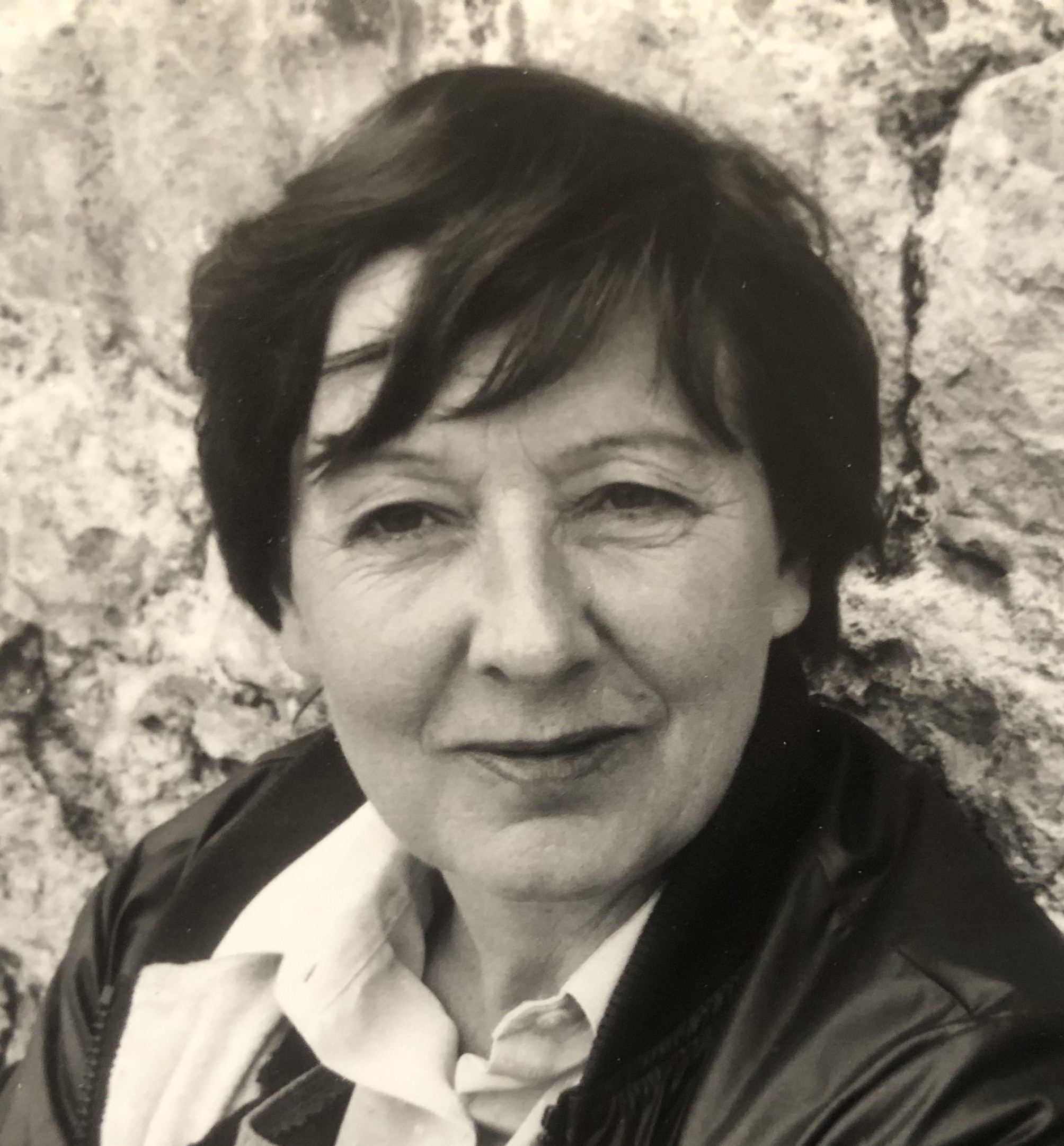
Master’s Degree (Master of Arts), Université de Cornell, juin 1955.
Ruskin and Turner
Historical evolution of aesthetic standards. Interest today in Ruskin’s historical position. Importance to Ruskin personally of his love for art and nature, and of his meeting with Turner.
I – Conditions of Ruskin’s criticism of Turner
Ruskin’s temperament and education. Influence of the Bible, of travel. First contact with Turner’s works. Personal relationship with Turner’s: works devoted to Turner. XVIIIth Century views of paintings: factors which change these views: Turner’s achievement.
II – Criteria and main themes of Ruskin’s criticism
Changes in Ruskin’s criteria and taste. His formal scheme of the Five Categories. His position regarding aesthetic formalism and empiricism. His analysis of truth and beauty. His defense of mediaeval painters, of Pre-Raphaelitism. Relationship of art and nature. The role of imagination in art. The “Pathetic Fallacy”. Art and religion. Our approach to Ruskin’s criticism.
Turner’s landscape paintings seen in relation to the work of preceding landscapists. Turner and foreign countries. Turner the colourist. Turner the painter of nature.
Introduction
Art historians commonly agree in admitting the importance of the turning point reached both in art and art criticism, during the XIXth Century. Modern criteria in aesthetic appreciation owe much to that period, as it achieved the indispensable preliminary task of eradicating from public taste the most obvious prejudices that had blinded the earlier upholders of “grand style”. It led to setting art free from the misleading notions associated with it.
Aesthetic standards have varied since the days of romantic idealism, the days when Wordsworth wrote the Preface to the Lyrical Ballads or the essay supplementary to it, Coleridge the Fragment of an Essay on Beauty or the Essay on Poesy and Art or when, in France, Baudelaire wrote his Essay on Delacroix; but the predominance given to the artist’s personality and expression (a view of art wide enough to take in the most distinctive styles which together make up what we call “Modern Art” dates from then. As early as 1846, Baudelaire prescribed for the artist “l’individualisme bien entendu” and “la naïveté et l’expression sincère de son tempérament, aidées par tous les moyens que lui fournit son métier” [1]. One could mention many a living artist who would not refute this opinion.
From the historical point of view, Ruskin holds a particularly privileged and interesting position. Here was a man who devoted his whole life and the best of his capacities to the elaboration of a vast theory on art which was the fruit of much sincerity, much earnest study and much enthusiasm, and which he delivered to his fellowmen as a message. This message was original without being revolutionary: it was deeply rooted in what had been written before on the same subject-matter; it retained such of the phraseology then in use among critics; but it also belonged so much to the new spirit of his age that Ruskin was considered more and more as a “great modern” and received in his lifetime as much veneration from his contemporaries as a man could hope for. As a consequence, we see him now first of all as – to quote the title of the study by Derrick Leon – “Ruskin, the Great Victorian” [2].
In 1897, Robert de la Sizeranne [3], considering Ruskin’s modernness founded it on three grounds: in an age of greater insight – that is, more anxious to discover the reasons for its impressions – Ruskin’s criticism goes further in the minute examination of the works; in an age that was becoming more cosmopolitan, he takes his examples from a greater number of nations and landscapes; and lastly, in an age becoming more social minded, more preoccupied by the difficulties of class relations, he is more aware of the social significance of art and of its obscure affinities with the life of the people. In point of fact such judgment has to be qualified by bearing in mind that Ruskin was also set against much of what constituted progress in his century, the advance of the machine for instance, and opposed industrialism with all his eloquence and energy, as when founding the famous Guild of St. George.
But the danger of being a Modern is that one appears intolerably old-fashioned to the next generation, and a strong reaction against Ruskin was to come, when the early XXth Century extremists of “art for art’s sake” aimed at cutting aesthetics from anything connected with life or its preoccupations and refused to allow any other criterion in the appreciation of visual art than that of “significant form” [4]; these could not help but laugh at Ruskin’s ideas on “nobility in art”, “great art” and the “gentleman artist”, and saw them as so many prejudices inherited either from the classical theories on “grand style” or as forming part of the narrowness of mind of the Victorian upper classes.
Clive Bell, who sees Turner as an “after dinner poet” does not sympathize much with the man who spends so many pages attempting to do justice to the painter’s genius. But, in turn, this sterilizing tendency has been rejected as barren by a more passionate age which again inclines to look for unification in art and, in its scorn of dilettantism, is more ready to sympathize with Baudelaire’s assertion: “Pour être juste, c’est-à-dire pour avoir sa raison d’être, la critique doit être passionnée, partiale, politique, c’est-à-dire faite à un point de vue exclusif, mais au point de vue qui ouvre le plus d’horizons” [5] – an assertion which could well be applied to Ruskin’s criticism, violently polemical, guided by an exclusive admiration, and synthesized into a general theory on Art. For Venturi as for Clive Bell, what distinguishes art from life is form, which he defines as an act of contemplation but he thinks that any work of art needs some lifegiving principle, running within it as blood runs under the skin, and that an art which refuses the participation of life lacks a soul, a necessity and is therefore purely gratuitous; he sees that cubist art, through idolatry of style, goes astray by cutting itself off from immediate sensation. Such a new approach to art makes it possible for Ruskin’s voice to be heard again and if the gigantic monument of his works can no longer be for us the artistic gospel it was for Victorian Britain, we can on the other hand appreciate better in what measure it was an advance on previous art criticism and what have been its contributions to later tendencies; we can still admire it, as well, for the harmony which it holds with a life that was devoted to it. Rarely is this to be found in literature: for if, often, the works of a writer reflect the various tumults and experiences of his life, it is much less frequent that the life should be so impregnated with a sense of the creative task to accomplish, and should partake so fully on of the same ideals; indeed the figure of Ruskin himself glowed with the same prestige as his work did, for he was but another aspect of it, well deserving to inspire the same quality of admiration.
In a letter addressed to Rossetti in the early 1830s he confessed that he had “no friendships and no loves” and that his pleasures are “in seeing, thinking, reading and making people happy” (he adds “…if I can, consistently with my own comfort”). In the same letter he puts forward a theory of life which gives us the clue to his whole attitude to existence up to his death, “namely that we are all sent into the world to be of such use to each other as we can, and also that my particular use is likely to be in the things that I know something about – that is to say: in matters connected with painting” [6]. So his private or sentimental life was of little importance to him compared to his artistic tours on the Continent, spent in loving studies of gothic cathedrals, Italian primitives, or landscapes which had been painted by Turner; or compared to his living lectures on art and teaching in the Working Men’s College, when social and artistic preoccupations became inseparable for him; or to his making catalogues for the British Museum after the Turner Bequest, which meant contributing to the fame of “his” painter.
We take the liberty of saying “his” painter (though Ruskin himself was not vain enough to use such an expression) because it is a way of conveying something of the main spiritual adventure in Ruskin’s life, his encounter with the contemporary painter, Joseph Mallord William Turner, to whom he reacted so enthusiastically that he did not hesitate to devote himself to a far fetching scrutiny of his pictorial art in the hope of gaining for him a fuller recognition on the public’s part. This meeting was a fortunate event in the history of art, at a time when a growing change of the general attitude towards Nature and Art was allowing landscape in the modern sense to take its due place in painting: there was Turner on the one hand, who, having rich perfect skill and mastery in his art, neglected the public applause which had been lavished on his early works, and, through slow and steady progress until the final breakdown, explored the new fields of experience now open to landscape painting. On the other hand there was the young John Ruskin, endowed with the love and sensibility, the comprehension and gift of expression indispensable to any critic in order to interpret the works he criticizes; the combination of this unlimited admiration for Turner, his patient analytical mind, his faculty of synthesis, and his incredible control of words which allowed him to frame what he meant in brilliantly convincing sentences, made him the man best qualified to follow Turner in his experiments, so far ahead of their own time and to understand the solidity of art under the apparent chaos of golden light. In return Ruskin’s enthusiastic appreciation was to be the starting point for a more general elaboration of the principles on which he thought that such painting was based. He was aware of these implications soon after having started the first volume of Modern Painters. In the preface to the second edition, he wrote: “in asserting and demonstrating the supremacy of this great master, I shall both do immediate service to the cause of right art and shall be able to illustrate many principles of landscape painting, which are of general application, and have hitherto been unacknowledged” [7]. But he did not fully realize yet the complexity of the task he had undertaken, nor the numerous contradictions he would have to struggle against once thrown into purely theoretical matters, with their demand for a consistent philosophical position.
But before considering the main realizations of Ruskin’s purpose, we can examine its sources and the conditions, psychological and historical, of its achievement.
I – Conditions of Ruskin’s criticism of Turner
Ruskin was the son of an intelligent father who, besides being a wealthy wine merchant able to afford for his son a gentleman’s education and, by supporting him as long as need be, to set him free from material preoccupations, was also an enlightened dilettante and sensible pedagogue who took great care of feeding and guiding his child’s exceptional curiosity of mind, and of developing his gifts. John Ruskin was an only child and brought up at home in extreme isolation from other children, which perhaps did not do more than accentuate the innate tendencies of his character, but which accounts for much of his later attitude: human relationships were never a vital necessity for him, and it was only through a sense of duty which demanded of him solidarity with his fellow-beings, that in his later years he set himself the task of making contact with his fellow-men, and this, with the intention of being useful to them, of enlightening them and making them happy.
There was, of course, his passionate subordination to the grandeur of Turner and it does not seem unreasonable to see in this a rather natural consequence of young Ruskin’s emotive development; his few early experiences with women had been, on the whole, abortive (more than creatures of flesh and blood he had seen in them inaccessible idols representing the beautiful and noble virtues he most revered, and he had worshipped them more than really loved them); joined to his rather effeminate character, it gives reason to suppose that for Ruskin, art was a substitute for passion as well as a lifelong interest, and that his attachment to Turner, the man and the work, was the answer to a deep conscious or subconscious urge. There are other examples an English art of this tendency for an artist to efface himself behind a stronger creative personality: the most famous is that of Boswell and Johnson and in recent times there has been the case of John Middleton Murry and D.H. Lawrence. Ruskin, like Boswell and Murry, was ill repaid by the object of his admiration and accepted this situation with affectionate resignation; but at the same time his devotion was to benefit him eventually by acting as a stimulus on his own work.
He at times deplored being cut off from the exciting world of loves and passions (as appears in the above-mentioned letter to Rossetti) but his sensibility was of a nature that developed to its highest degree in solitude, and especially at the sight of nature. Another important influence which his education had upon his character was the Bible which, as in any religious English family of the period, he had to read daily throughout his childhood. What particularly moved him, in the Bible, was this sense of the divine infused in the beauty of natural things and this “delight in natural imagery” [8] corresponded so exactly to his own inclinations that he had no difficulty in assimilating it. The very rhythm of its periods, regular as breathing, inspired the future writer of Modern Painters and of The Stones of Venice. Even when very young, if he underwent intense physical emotion in front of some beautiful landscape, it was partly because in Beauty he felt the presence of the Deity. But this was combined in him with an inexhaustible curiosity for the natural sciences which led him to a descriptive study, geological and botanical, of the elements that he saw, not only in Nature herself, but also in Nature as expressed through the medium of landscape painting. We shall see that his love for nature was also going to attract him towards Turner, and to guide his whole criticism of the painter’s work.
Ruskin’s sensitivity to art, inseparable from his sensitivity to nature, developed very early too. His father judiciously contributed to this development: nearly every year he took his son on continental tours to Switzerland, Germany, Italy and France, so that Ruskin thus became acquainted with the architectural, pictorial and natural treasures of these countries. Ruskin was also initiated to the art of drawing – he took regular lessons from the age of twelve – and to the appreciation of the pictures that his father purchased, which bore witness to an advanced taste.
In 1833, when Ruskin was fourteen, he was taken on his first continental tour to visit the Alps and Italy, an interesting fact when we consider how much of his inspiration Turner found in this part of the world. And from then onwards, continental tours were to be an almost annual habit with him, either alone, and sometimes for health reasons, or with his parents. Despite his numerous visits to Switzerland, Germany and Italy, he never went to Holland and perhaps his misunderstanding of Dutch art is partially explainable, if not excusable, by this lack of direct contact with their source of inspiration. However, he became acquainted with the main artistic or natural treasures of the countries mentioned above, and much of this knowledge was to be vital for his experience and work, especially Florence, Venice, and the Gothic cathedrals of France, notably his favorite Amiens.
During these expeditions he methodically noted down his observations, sometimes with a professional view to using them as documents or examples in his demonstrations, sometimes simply with a poet’s instinctive aspiration to fix on paper the passing sensation in the net of magical words; but as his aim was always to be true before all else – true to things as he had seen them – and as his means of expression and language were always superbly adequate, the two aims cannot be clearly separated. Some notes put emphasis on the scientific nature of the object, others on the poetical (that is some on the information and some on the impression) but Ruskin considers that one really springs from the other. His diary is full of examples of these scrupulous and suggestive passages, for instance this concerning the changing hues of an Autumn sky:
“November the 3rd: dawn purple, flushed, delicate. Bank of grey cloud, heavy at “six [sketch]. Then the lighted purple cloud showing through it, open sky of dull “yellow above – all grey and darker scud going across it obliquely, from the “southwest – moving fast, yet never stirring from its place, at last melting away. “It expands into a sky of brassy flaked light on grey, passes away into grey morning.” [9]
The express purpose of this personal notes was not to teach other people to see (which he thought to be his mission in life) but first to teach himself to see, and he knew how much he depended on the acuteness of his sensibility and the tension of his mind to be able to grasp fully what he saw: during a walk at Sallanches, in June 1849, he found that tiredness prevented him from enjoying the full power of nature, however beautiful the mountain scene that surrounded him; but as soon as he concentrated on one thing – grass or stones or single peak – then the full enjoyment of its majesty possessed him:
“…because then I had mind enough to put into the thing, and my enjoyment “arose from the quantity of mental imaginative energy which I could give it” [10].
The continental tours became more and more of a spiritual necessity to him, a desire to escape at times from what shocked him as “minute” and “narrow” in the provincial life (very much so in the Victorian age) of a country where, however, he always felt at home. On his way back from the Valais, on one occasion, we find him going to Canterbury, where he struck by the contrast:
“All so neat, and homely, and happy, and yet so utterly vulgar – such an air of “ale and tobacco and sanded floors about it all (first rate ale and sweet tobacco “in pipes – no cigars). And tea and pleasant, homely talk, moral and narrow to “the uttermost. One cannot conceive anybody living in Canterbury to have any “ideas of advance, or change, or anything in the world out of Canterbury.” [11]
This is one aspect of his love for the “great” as opposed to the “vulgar” and the familiar a trait of his temperament more than a defined social or moral notion, and it was going to give the tone of his defense of Turner.
Ruskin was thirteen years old when, in 1832, as a birthday present from a certain Mr. Telford, he was offered a copy of Roger’s Italy, with Turner’s vignettes which had been published two years before. The vignettes were engravings in the topographical style then in fashion. This first approach of Ruskin to Turner’s works, a signpost in Ruskin’s life, was characteristic of his eagerness to learn from the object of his admiration: his delight in contemplation always induced him into action, and he set to work at once to copy them. Of course, he had already heard of Turner, whose fame had been immense, but who was meeting with more bitter criticism every day, since he had exhibited his first subjects from Venice in 1830.
In 1836, three Turner pictures were exhibited at the Academy: Juliet and her nurse, Rome from mount Aventine and Mercury and Argus. They were his later manner, and were attacked in Blackwood’s magazine of October; Ruskin, who had already given Turner his “allegiance”, wrote an enthusiastic defense of the Master, which he first sent to Turner who instead of communicating it to Blackwood’s as Ruskin hoped he would, gave it to the purchaser of Mercury and Argus, one of the first disappointments Ruskin had to bear in his relations with Turner.
A year later, when a young undergraduate at Oxford, he wrote The Poetry of Architecture, or the Architecture of the Nations of Europe considered in its association with Natural Scenery and National Character, an essay which is signed Kata Phusin. In Praeterita, looking back to this early prose writing of his, Ruskin gave as his judgment:
“I could not have put in fewer, or more inclusive words, the definition of what “half my future life was to be spent in discoursing of; while the nom-de-plume “I chose, “According to Nature”, was equally expressive of the temper in which “I was to discourse alike on that and every other subject.” [12]
It is to be noticed that Ruskin’s studies on architecture, with which we do not intend to deal here, were always pursued parallel to his studies on painting, and that his interest was as keen in the one as in the other; The Stones of Venice and The Seven Lamps of Architecture were published between the second and the third volume of Modern Painter. Ruskin was attempting to revive the opinion, which has been lost again since, of the essential unity of the plastic arts: architecture, sculpture and painting are but a part of the same whole – architecture for instance should be sculptural, and he considered it, as well, as “an essential part of landscape”: he thinks that a landscape painter should have studied architecture, so as to record its styles faithfully when they have to appear in his pictures, and that an architect should understand the beauty of nature, so as to be inspired by its laws when raising his monuments. [13]
The gradual loss of a common basis for the arts, the “loss of the center”, has been seen by discerning critics as the heart of the crisis to which art has now come. After having been considered as progress and a step in the autonomy of art, it has inevitably led modern art towards the impasse of the inorganic and the chaotic. [14]
It is interesting also to see that; though Ruskin did not realize it perhaps, Turner attempted to find a solution within the chaos itself, accepting nature as such, and finding in light the unifying medium, coming this very close to Shelley’s views of the “orbed world” [15]:
“With mighty whirl the multitudinous orb
“Grinds the bride brook into an azure mist
“Of elemental subtlety like light” [16].
There is a definite correspondence between Shelley’s blending of all elements into a mystical union, and some of the later whirlwind-like pictures of Turner which “roll and move and grow as with an inward wind” [17] or
“Round its intense yet self-conflicting speed
“Seem kneaded into one aerial mass
“Which drowns the sense” [18].
If a study was to be undertaken on the world-unifying principle of art, such confrontations might give fruitful results, not only because of the equally cosmic inspiration of the poet and the painter, but in the technique itself; a parallel could be drawn between Shelley’s emerging symbolism, at the core of his romanticism, and Turner’s drowning of the outline in pure colour. The despair man feels in front of an alien world is at the same time expressed and surmounted in the unity of art. Romanticism, submerging the sacrosanct quality of tangible form as much in rich in literature as in painting, links Shelley’s and Turner’s experiments, and Kenneth Clark writes: “It is not surprising that in the pursuit of light which was to culminate in impressionism, it was a master of imaginative landscape, a romantic and not a realist, who made this decisive step. It was Turner who raised the whole key of colour so that his pictures not only represented light, but were symbolical of its nature” [19].
A point of note in the Ruskin-Turner association is the extraordinarily limited degree of their personal friendship. One would have expected to learn much from the personal relationship of the two men, one of whom was a promising student so ready to become an active and devoted disciple of the other. A fruitful rapprochement seemed to most natural consequence of Ruskin’s comprehension of Turner: on the one hand there was young Ruskin’s eagerness for it; on the other there was Turner’s growing isolation and frustration at public misunderstanding; his change of manner had cost him his popularity; newspapers were becoming increasingly harder on him; and himself had never been apt at expressing in words his artistic feeling – as so often is the case with painters, he was in no wise a theorist. His lectures on perspective at the Royal Academy had proved a failure. It thus seems that he might have been at once touched by his young defender’s zeal and willing to encourage him. Indeed they met on June 22nd, 1840, at a dinner at Norwood invited by Mr. Griffith – “the only person whom Turner minded at that time,” Ruskin says – and we can well imagine Ruskin’s emotion at being introduced to the man whom he thought “the greatest of the age… at once the painter and poet of the day J.M.W. Turner”. In his diary, he described him as he saw him that night:
“I found in him a somewhat eccentric, keen-mannered, matter-of-fact, English-“minded gentleman: good-natured evidently, hating humbug of all sorts, “shrewd, perhaps a little selfish, highly intellectual, the powers of the mind not “brought out with any delight in their manifestation, or intention of display, but “flushing out occasionally in a word or look. “ [20]
On the whole, the meeting was a disappointment for Ruskin and no close contact was to come of it. Turner did not seem to notice him more than any other casual visitor; years later Ruskin still regretted it, though with no bitterness. In Praeterita he says:
“If he had but he asked me to come and see him the next day, showed me a “pencil sketch, and let me see him lay a wash! He would have saved me ten “years of life, and would not have been less happy in the close of his own. One “can only say, such things are not to be; every soul of us has to do its fight with “the Untoward, and for itself discover the Unseen.” [21]
Thus things did not go much further between them, and any account of their relationship would only have an anecdotical interest. Turner was sixty-five years old when he first met Ruskin, and he died eleven years later, after the first two volumes of Modern Painters had been published. Having become acquainted with Ruskin’s father who had started a collection of Turners about 1838 (soon imitated by his son) he sometimes visited the Ruskins at their home at Denmark Hill, received presents from them and always went to the dinner parties given for Ruskin’s birthdays; towards Ruskin he was kindly, invited him sometimes to coffee, showed him pictures, but did not care in the least for what he wrote. Ruskin had no illusions on that point, and acknowledges it himself in the closing chapter of Modern Painters (Vol. V), in which he attempts to do justice to Turner’s character and in particular to his kindness of heart, a rather meritorious task on his part as there was much in Turner’s private life which Ruskin could hardly approve of, and as the aged and somewhat haughty Turner he knew was not altogether an attractive character; he excuses his grumbling character on the grounds of his sufferings, recalls his professional zeal and integrity, his sense of justice, gives the example of his being “true to others”, of his avoiding depreciating words, refutes the charge that he refused advice to his fellow-painters: nowhere is there a single word showing the least resentment which would have been the natural reaction of a less “noble” character than Ruskin’s, in whom admiration is thus seen to have been free of any shade of conceit. This admiration sincerely extended to the man himself, as we can see from this fragment of a letter to his father written in 1852, soon after Turner’s death: “Were my life to come over again, for these last ten years, I would devote myself altogether to Turner, the man I mean, recording every sentence that he spoke and collecting every picture that came in my way.” [22] The passion of a collector and the passion of a disciple certainly co-existed in him, and he did not conceal the pleasure he had in acquiring a Turner picture: but his pleasure consisted rather in being able to admire it at ease and at every hour of the day than in the vulgar instinct of possession; when he loved the picture he never became tired of looking at it and of drawing new conclusions from this contemplation. The last three volumes of Modern Painters, written after Turner’s death, express the same discriminating veneration as the first two. Apart from Modern Painters, and after its completion in 1860, Ruskin, altogether engaged in numerous activities, never ceased to plead his brief for Turner, a task which he considered not as a duty but a “necessity”.
His contribution to Turner’s cause consisted mainly of lectures, of commentaries on series of works by the painter, and in the establishment of catalogues; among the lectures there is the well-known pamphlet entitled Pre-Raphaelitism, in 1851, and in 1853 the third of his Edinburgh lectures on architecture and art, Turner and his Works. He published Harbours of England which is a beautiful essay on Turner’s seascape painting, first intended as a complement to Modern Painters, and accompanied by a closer commentary on the twelve Turner drawings which illustrate the book. The first part of this book is a hymn to the Age of Boats (1750 to 1850), which he sees as succeeding the age of chariots and the age of horses, and which exalts first the fishing-boat, “watchful over some pathless domain of moorland or arable” and then the “small, over-wrought, under-crewed, ill-caulked merchant brig or schooner”. [23]
After Turner’s death came the famous “Turner Bequest” affair: Turner’s will, written without the help of a lawyer, left all his property, money and pictures to the nation, on the condition that a charitable institution for necessitous artists should be founded, a medal attributed every year, and a Turner’s gallery erected; two pictures, Dido Building Carthage and Sun Rising in a Mist were bequeathed to the National Gallery on the condition that they should hang between two pictures by Claude. But Turner’s family contested the will on the ground that it was illegal (contrary to the Charitable Uses Act) and there ensued a Chancery suit: Ruskin bitterly said that Turner’s fellow-countrymen had buried “with threefold honour, his body in Saint Paul’s, his pictures at Charing Cross and his purposes in Chancery” [24]. After years of litigation, a compromise was finally reached in 1856; the bulk of his funded property and his rights in engravings would go to the next of kin, the Royal Academy would have £20,000 and all his pictures and drawings would go to the nation.
Ruskin, away from England when Turner died, had been appointed an executor by the painter, but he renounced this executorship. Nevertheless he asked the trustees of the National Gallery to let him arrange the Turner drawings now belonging to the nation, as he thought he would do it with more pious care and discernment than anyone else and therefore considered it his duty to Turner’s memory; through the offices of Mr. Wornum he was granted permission to do this as he thought best, and he spent all the autumn and winter of 1857 busy classifying, cleaning, framing and cataloging the nineteen thousand drawings, sketches and water-colours which constituted the Bequest. All these are now kept in the Prints Room of the British Museum – most probably the biggest collection of works by a single painter ever possessed by a state – and the complete inventory of the drawings of the Turner Bequest by A. J. Finberg , Turner’s biographer, which was published in 1909 and is the one in use at present, availed itself of the enormous feat of labour accomplished by Ruskin.
Ruskin completed his task by additional catalogues or notes separately published; in 1856, Notes on the Turner Gallery at Marlborough House, a Catalog of the Sketches and Drawings by J. M. W. Turner, R.A., exhibited in the year 1857-58, accompanied by illustrative notes, a Report on the Turner Drawings in the National Gallery in March 1858; and, more important, a Catalog of the Drawings and Sketches by J. M. W. Turner, R. A., at present exhibited in the National Gallery; revised and cast into Progressive Groups with explanatory notes in 1881. In it, Ruskin’s express purpose is didactic; he has chosen a consecutive group of drawings which he thinks is worthwhile for students to copy; then follow observations on the technique – the method, the practice – alternating with judgments on the artistic value, in the most effective way: his criticism is limited to little groups of sketches and drawings of similar style, with a general appreciation of them. He uses no criteria foreign to the artist, but is content to follow the line of his evolution, so that these lessons of a man who knew so well and loved so much what he talked about were worth reading.
But they did not exert so much of his talent nor provoked such enthusiastic reaction as Modern Painters, which brought him to fame.
As early as 1841, Ruskin seems to have had in mind the scheme of some work of importance and wrote to a friend about it; but the immediate impulse which caused him to set to work seriously, in order to have the book published, was his indignation at criticisms in English reviews on the 1842 exhibition of the Royal Academy, criticisms in which Turner was attacked in most insulting terms. Ruskin read the reviews whilst on holiday in Switzerland with his parents after graduating from Oxford. The pictures exhibited by Turner in the 1842 Exhibition where two views of Venice, Snowstorm, Peace (the Burial at Sea of Sir David Wilkie), with its pendant War: the Exile of the Rock-Limpet (Napoleon). Ruskin had seen and admired those, which are indeed among the most successful canvases of Turner at the height of his power, and we can imagine his rage at seeing in wildly-read reviews disparaging observations in this style: “This gentleman has on former occasions chosen to paint with cream, or chocolate, yolk of egg, or currant jelly; here he uses his whole array of kitchen stuff” [25], or, about the pictures of Venice: “they are produced as if by throwing handfuls of white, and blue, and red, at the canvas, letting what chanced to stick, stick” [26]. These are both common enough ways of being sarcastic at a painter’s expense: to feign disgust at the effect produced by the painter’s choice of colours, and to blame the painter’s purpose in that, or to suppose that there has been no choice at all because the artist is a quack painter who does not master his art, (which is a normal reaction of an onlooker who, judging a piece of art “unintelligible”, wants to be on the safe side lest the artist should be making a fool of him). Ruskin resented more than their purport the influence they would have on the public, and was perhaps more angry still at criticisms more moderately expressed, but which showed and contributed to spreading just as deep a misunderstanding; the taxed Turner, mostly, with being unnatural and untrue: “Neither by land or water was such a thing ever witnessed” [27] was one of the things said of the “Snowstorm” which represents a seascape with a shadow of a ship lost in the luminous orb of the tempest, very characteristic of this letter attempts; and of the “Burial at Sea” a critic wrote: “though there is a striking effect, still the whole is so idealized and removed from truth that instead of the feeling it ought to effect, it only excites ridicule”. [28]
So it was on these grounds of conformity to nature and truth that Ruskin was going to challenge the enemies of Turner’s painting.
He had chosen to call the book Turner and the Ancients, but the publishers did not approve of this too obviously partial title which might have scared the public and, having realized that the book went beyond a more a mere judgment on Turner, gave it the more solemn title: Modern Painters: their superiority in the art of landscape painting to all the Ancient Masters proved by examples of the True, the Beautiful, the Intellectual, from the works of modern artists, especially from those of J. M. W. Turner, Esq., R. A. Afraid that he might not be taken seriously by the critics if they knew he was so young, he had not signed with his own name, but only “a graduate of Oxford”; and, indeed, in the first two volumes, one notices the young writer’s care to assure his readers of his earnestness and to conceal his youth under the mask of impersonality, or to suggest long experience behind him, as when he asserts that he has been “devoted from his youth to the laborious study of practical art” [29]. It is typical, too, of his rashness, that, enthusiastically carried away by his immediate purpose, and over-anxious to prove and demonstrate, he should have relied on a systematic classification of aesthetic concepts into categories which, he thought, he had elaborated into a consistent theory: he was confident that by a meticulous analysis of them, the essence of art could be grasped. But, because of its rigidity, this framework does not succeed in enveloping the complex and manifold implications of the matters at stake; moreover, having little philosophical background himself, he used philosophical phraseology rashly; words like “noble” and “sublime” had a sentimental appeal to Victorians, and Ruskin used them without defining them, as if they had a demonstrative value of their own, a method which has been denounced as rhetorical by critical analyses.
The second volume, Of Ideas of Beauty, followed the first in 1846. Cook and Wedderburn described it as “in part a hymn of praise, inspired by the religious ideal of Giotto and his circle; and in part an essay upon the Imagination, inspired by Tintoretto’s works in the Scuola di San Rocco” [30]. Ten years elapsed before the third was published; in it, Ruskin broke away from his previous formal scheme, as is clearly shown by the title Of Many Things. Its first part constitutes an interlude, dealing with the apparent contradiction of the previous volumes, and trying to clear up difficulties. As Cook and Wedderburn see it, the actual structure of the volumes at this point differs from the chronological order of their issue. The first few chapters of Volume IV follow up this interlude, and deal with Turner’s art and technique – his Picturesque, his Topography, his Light, his Mystery.
The last eight chapters of Vol. II and the last two of Vol. IV form as separate treatise on the history of landscape as deducible from art and literature, and the history of man’s feeling towards natural scenery.
The fourth volume, Of Mountain Beauty and the first two parts of the fifth Of Leaf Beauty and Of Cloud Beauty are an essay on the beauty of mountains, trees and clouds, whereas the remainder of Volume V, only written four years later, is a treatise on the relations of Art to God and Man (Of Ideas of Relation: first, of Invention Formal; second of Invention Spiritual).
Thus was brought to an end this monument which stretched over seventeen years of Ruskin’s life; he had often put it aside and perhaps would never have set his mind upon concluding it if he had not been stimulated by his ageing father’s constant persuasions; all in all, he put much of himself into it; it met with as much public applause as he could hope for, and in particular the long-awaited publication of the last volume brought his popularity to a climax – even among people who were to disapprove of his later activities and proclivities: some praised him on the grounds of what his criticism offered to them personally, like Charlotte Brontë, who said that he had given her eyes. Others lauded its political creation. The review Shirley gives us an echo of these: “Several poems in this closing volume,” it says of Volume V of Modern Painters, “are superb. There is a grand song about the pine, such as some grey-beard Bard in the Halls of Horsa might have sung; a glorious Greek hymn of death and resurrection; idylls about the leaves and the lichen and the mosses; an ode to Venice, blue and vivid as its own sea and sky. The very titles to the chapters are chosen by a poet” [31]. The reviewer’s words, “songs”, “ideals” and “odes” are significant: we are no longer offered such lyrical art criticism nowadays as one finds in Modern Painters, any more than our historians are any longer Michelets, and in an age when even fiction imitates the elliptical objectivity of journalism there would hardly be room for it: but perhaps there is room in our hearts for hidden regret that this leisurely eloquence would have should have disappeared.
That Ruskin’s so-called “case for truth” met with such success is partly due to the fact that it came just at the right time: a change in the direction of painting, closely connected with the change in the public taste, caused the former manner of art criticism to be felt as out of date by a majority which was now ready to welcome any theory upon art at once original and in line with the new spirit of the age. Because of this, Ruskin’s theory cannot be understood, nor its historical importance grasped, without an idea of the aesthetic evolution of the time; interwoven as it was with social and literary changes, it was this evolution which allowed not only Ruskin but also before him the painter whom he wished to defend by setting new criteria, Turner, to achieve his works: both the painter’s and the writer’s originality can only be defined in relation to what had preceded them.
The XVIIIth Century had been the reign of “grand style”, an artistic tradition which had all the power of a dogma. The main rule was that Art was to improve upon Nature through an ideal selection of “noble facts”; this meant that the essential importance was attached to subject matter; so much so that they had long been a traditional tendency to consider Poetry – which allowed a so much wider range in the development and choice of noble subjects – as the first of arts, and Painting only as a minor one. Some critics, early in the century, had reacted against this: Jonathan Richardson, with his Essay on the Theory of Painting in 1715, and The Connoisseur in 1719, was one of the first to defend painting on the grounds of its dignity and usefulness – but still, therefore, judging it by literary standards. He also remained very typical of his age by considering landscape according to those standards, that is as a lower kind of painting, essentially decorative. He wrote:
“A history is preferable to a landscape, sea-piece, animal, fruit, flower or any “other still life, pieces of drollery, etc. The reason is, the latter kinds may please, “and in proportion as they do they are estimable… but they cannot improve the “mind, they excite no noble sentiments, at least not as the other naturally “does.” [32]
This tendency to seek for improvement of mind in art is general in the XVIIIth Century; on the other hand, parallels between painting and poetry and numerous. Historical painting was considered by William Gilpin as a form of epic; John Nourse, in Ut Pictura Poesis, brought together painters and poets like Titian and Ovid, or Poussin and Theocritus; in 1775 George Keate wrote a dramatic poem, “The Monument in Arcadia”, based on Poussin’s picture, as he thought that “painting and but half tell a story” and that “to unveil external appearances, and to paint that precious Disposition of the Mind, which fixed them… is an elder sister’s province, and the peculiar property of the Muse.” [33]
With such a literary approach to art, what, of course, was most valued was historical and religious painting. What the “nobility” looked for as a taste of good art was not a philosophically elucidated concept, but rather a sentimental notion implicitly admitted by the privileged classes which owed their very existence to the tradition of nobility; even if nobody said that “noble art” meant an art for gentlemen, this notion was secretly ingrained in the common understanding; therefore it admitted portraiture, that solemn consecration of social distinctions, but can only accept landscape under certain conditions, in the setting of which other factors have their part. In the XVIIIth Century, with the taste for travel, the custom of the “grand tour” began to establish itself; this took a young gentleman to France, Switzerland and Italy, as a complement to his education: a classical taste for Italy began to develop, and a better knowledge of its monuments and painters; the influence of the ancient world upon modern civilization was better felt when one had seen its suggestive ruins in Rome and elsewhere; here was a noble world indeed, and deserving veneration. As far as landscape was concerned, pictures with classical associations were the ones chiefly admired; the main favorites were Salvator Rosa, who had died in 1673, Claude Lorrain, who had died in 1689, and also Nicolas and Gaspard Poussin; the popularity of Claude and Salvator Rosa had begun as early as 1640; of Claude, appreciators loved the “Virgilian tranquility” treated with “dreamy sweetness” [34] and of the “savage Rosa”, as Thomson called him, the “sense of delight and vastness of nature and the littleness of man, the thrill of the wild and untamable” [35]; both their styles, with their wild or architectural sceneries used as a vast setting for grandiose historical scenes, were untiringly imitated throughout the XVIIIth Century by English artists, among the most successful being John Griffier, Phillip Boril, Henry Cooke, George Smith and the very popular John Wootton. Their popularity was partly explained by the fact that it was not necessary to have a painter’s eye to understand them: one was at once familiar with the story that was told, and enjoyed the narrative effect of it.
By 1740 connoisseurship – encumbered with those qualifications of academic taste which had been imposed upon it – was together with the grand tour one of the achievements a fashionable gentleman aimed at. In 1734, a Dilettanti Club was established; which would have been unthinkable half a century earlier and shows how fashion had taken a grip on painting and raised it from the disparaged rank it held before. “Taste is now the fashionable word for the fashionable world,” Chesterfield could say in 1738 [36] and many great collections were begun at that time.
Dutch landscape painters – Ruisdael, Cuyp, Hobbema, Keuninck – were appreciated too, but classed below painters in the Claude or Rosa category because they did not “improve” so much on “vulgar nature”; the Romanticism of their skies, however, was to appeal more to English sensibilities by the end of the century; a more sincere love of nature gradually counterbalance classical taste; it is all the more surprising, therefore, that Ruskin failed to see in Dutch painting anything worth his admiration.
Under the influence of numerous factors, a change in taste was gradually taking place and preparing the way for Turner and also for a new art criticism more in line with the new art; parallel with this new movement, and even in Turner’s time, Academism ran its course, taking as its standards the professional teaching and historical canvases of Opie, Fuseli (who was Lecturer in Painting at the Royal Academy in 1799), Haydon, the portraits of Lawrence, and the popular genre studies of Wilkie and Leslie.
The vogue for travel was but a sign of a general wider curiosity; on the one hand the thirst for new landscapes and unknown aspects of nature developed the taste for the picturesque: the increasing vogue of the word itself would be interesting to follow up in writings from 1760 to 1800, as well as the complexity and variations of its significance, implying or romantic delight in the untamed, unarranged beauty of sea, rocks, mountains and, in fact, any glimpse of mysterious nature inviolate and impenetrable, as also in the pictorial quality of forms and colours. On the other hand, the curiosity for science and the development of history and archaeology contributed to transforming the general knowledge of art. Hitherto purely descriptive, it became a more historical study.
Travel also contributed to the development of an art which is generally considered as a specifically English achievement, and holds a fundamental place in Turner’s works (even in the technique of his oil paintings), namely water-colour. The desire of English travellers to have a record of the places (ancient monuments or picturesque landscapes) that they had visited was the origin of the demand for topographical draughtsmen; these at first only did simple wash-drawing, as accurate and precise as possible, but the most skillful soon chose to do more elaborate water-colour sketches, and some became renowned and sought after specialists. Rich travellers and antiquaries used to take with them a water-colour painter as a companion, to Italy for instance; thus Girtin went with James Moore, the antiquarian, and thus Cozens accompanied Beckford on his grand tour; Girtin was also a teacher to noble patrons (Lady Gowen, for instance). Paul Sandby, one of the most famous in his time, taught the royal children. We must also mention Webber, Hearn, George Barret the younger, Glover, Mortimer, Ibbetson; most of them took their inspiration from Italian painting, but the best among them were genuine artists who, while giving a recognizable image of the palace or the church they painted, still freed their sketches from subordination to purely architectural and geographical reality.
As a consequence of the social changes undergone by England after the Industrial Revolution, a wider public was now interested in Art; it was no longer the privilege of aristocracy, and aesthetic consciousness was growing among a middle class which was also taking political and financial control of England.
The development of magazines and journalism in general quickened this popularization of art, and, in particular, improvement of printing processes made the masters of landscape-painting familiar to thousands of people who were eager for this opportunity; a school of landscape-engraving developed using the combined technique of mezzotint and etching. As a painter’s popularity partly depended upon the quality of the plates made up from his sketches, it was essential for him to secure a good engraver; William Woollett was among the best, with Richard Earlom, through whose engravings Turner became acquainted with Claude’s Liber Veritatis – a series of sketches of all the pictures he had painted – and conceived the idea of a rival Liber Studiorum: Turner was very particular about the engraving of his sketches and it was partly with his own hand that the subjects treated in sepia drawings were transferred to copper by this mixed process of etching and mezzotint; in Turner’s day, some of the best known among the innumerable engravers in mezzotint were William Say, Dunkerton, Earling and Dawe.
So, by the end of the XVIIIth Century, whereas the noble public still upheld Academism, the new “bourgeois” public turned to Nature and was ready to welcome painters who expressed a genuine love and accurate observation of it: Wilson, who had acquired both in Italy, and refused to compromise with the qualification of classical elegance, had come too early to meet with a comprehensive public, and died without having enjoyed any popularity, but John Crome, Cotman and Constable were enthusiastically appreciated in their own time. Constable was one of the first to renounce the “mellow” tones previously used in a noble representation of Nature. Elizabeth Manwaring relates (quoting from Leslie’s Life of Constable) how the painter, being advised by Sir George Beaumont, Turner’s great enemy, to adopt the colour of an old Cremona violin for the prevailing tone of his pictures, replied by laying the violin down in the green turf; this is a fine example of the regard for truth which Ruskin was going to require of modern landscape-painters. Sir George Beaumont was one of the Directors of the British Institution and he embodied the most aggressive form of the Institution’s rivalry with the Academy, the former said by the latter to cling to the most obstinate prejudices of the connoisseurs and dilettanti of the XVIIIth Century. (For Beaumont, the only modern painter who had a right feeling and judgment for landscape painting was Sir Joshua Reynolds, and when he painted he had a picture by Gaspard Poussin by his side to “give the right tones”.)
Joseph Mallord William Turner, born in 1775, represents a sort of synthesis of the various tendencies we have just seen. In a long and steadily progressing career started when he was very young, he had managed to assimilate, rival with and outgrow the styles of his predecessors, one after the other. This undisguised intention to rival Claude, Wilson, Nicolas and Gaspard Poussin, Titien and Vandevelde, Cuyp and Teniers in their own fields is considered by some as a sign of the narrowness of his class, of a rather vulgar desire to triumph, but causes Ruskin to uphold his hero as a champion in every domain.
Everybody knows that he was the son of a barber and that he began by copying engravings exposed for sale in his father’s window; when still a child, he was employed in colouring prints for John Raphael Smith; this very practical apprenticeship (always an excellent stepping-stone for an artist) was completed by making drawings at Dr. Monro’s, or for the “Adelphi”, and washing in backgrounds for Mr. Porden. At Dr. Monro’s he made friends with the very gifted Girtin, watercolourist who died very young, in 1802, and of whom Turner once said: “If Tom Girtin had lived, I should have starved”; Girtin’s practice was founded less on his predecessors in water-colour art, Sandby, Hearn and Dayes, than on the paintings of Canaletto, Rubens and Wilson; his favorite subjects were ruined castles and abbeys, the moorlands and mountains of Yorkshire, Northumberland and Wales, and for a time he and Turner studied together.
In 1789, Turner was a student of the Royal Academy, and in 1790 exhibited his View of the Archbishop’s palace at Lambeth; in 1794, he had a commission from J. Walker the engraver to make drawings for his Copperplate Magazine. In 1799 (he was twenty-four then, just the age of Ruskin when the first volume of Modern Painters was published) he was elected an associate of the Academy and, after the success of his Bridgewater Sea Piece (Dutch Boats in a Gale: fishermen endeavoring to put their fish on board) in the Exhibition of 1801, he was elected a Royal Academician in 1802; from then onwards success and wealth were assured and did but increase; he might have been tempted to make his way into fashionable society, but his roughness of manners and unsureness of speech made him a rather retiring man who, besides, was too much devoted to his art to sacrifice precious hours to what he would have considered to be a waste of time. He was a practical man, not at all indifferent to the money he made out of his pictures; but he never seemed to care much for the praise he received or for the attacks made upon him; thus it happened that, for a long time, his path ran parallel to public taste and he was popular; but when his more daring originality became unanimously deprecated, he held to what he thought was right without paying any attention to public disfavour and Ruskin was probably more deeply hurt by the hue and cry of the critics than he was himself – he knew that the reaction of the critics was inevitable and thought the only thing that mattered was to go further and further into the tempting and sometimes morbid world of “golden visions” that decided his genius and eventually cost him his sanity.
Turner’s earlier pictures in oils show that to a certain extent he respected the convention of seeing in landscape a noble setting for historical scenes, acceptable if it had some figures or architecture in it. The very titles of his landscapes make his intent explicit: The Fifth Plague of Egypt (1800), The Army of the Medes Destroyed in the Desert by a Whirlwind, foretold by Jeremiah (1802), Snowstorm: Hannibal and his Army Crossing the Alps (1812), Dido and Aeneas (1814). One, which is directly inspired by Claude, even bears such an elaborate title as: The Decline of the Carthaginian Empire; Rome being determined on the overthrow of their hated rival demanded from her such terms as might either force her into war or ruin her by compliance; the enervated Carthaginians, in their anxiety for peace, consented to give up even their arms and their children (1817). Indeed, the painter seems to have fallen in line there with the opinion that painting could tell but half the story and the epic poet in him to have thought fit to enhance the effect of drama by an exact account of the historical background. “Whirlwinds” and “Snowstorms” and other manifestations of a chaotic cosmos appealed more and more to Turner while frail human destinies (whether they be those of the Medes or that of Hannibal) which had at first been a subject in their own right as well as a pretext for exercises in composition, gradually disappeared from its canvases. But his concern for idealization and dramatization, which he shared with his predecessors, never entirely gave way, and man’s presence, however unnoticed, remained, with a few exceptions, the seal of this; a tempest at sea can be a gorgeous amalgam of movement and colours, pictorially very effective; but it is only a drama – and this is precisely what Ruskin thinks it is in Turner’s best paintings – if there is a ship lost in the middle of it.
The topographical tradition was also very vivid in Turner. Tours in England and on the continent were, as well as their response to the popular demand of the age, a necessity for his art, and each of the countries which he visited brought him a different and enriching kind of inspiration. From 1790 to 1797 he mainly explored the South of the Humber and Wales; in 1797, he made a tour in the North and went as far as Scotland before 1802, the date of his first Scotch views; 1802 was the date of his first tour on the continent, and in 1803 he exhibited six pictures of foreign subjects, among which there was the famous “Calais Pier”. From 1803 to 1815, the war with Napoleon compelled him to depend on his own country for his subjects and his yearly excursions were mostly into Devonshire.
In 1819 he paid his first visit to Italy and the Venetian painters were an amazing discovery for him. Indeed, from the Alps – one of his earliest continental discoveries – to the Venice of his maturity, (his first subjects from Venice were exhibited in 1830, when he was fifty-five) Turner can be seen indefatigably experimenting new technical mediums and new means of expression, and the innumerable sketchbooks, drawings and watercolours which he brought back from his tour shows well the eclecticism of the styles which he successively adopted. The Rivers of England (1824), the Southern Coast and the Meuse-Moselle Tour (1826), England and Wales (1827), the Rivers of France (1834) or the famous Harbours of England commented by Ruskin – all these show a unity of style within the series as remarkable as the diversity from one series to another.
Turner also willingly submitted, too, to the demands of engraving in his illustrations for books, for doctor Whitaker’s History of Richmondshire in 1823 for instance, as well as for Roger’s Italy in 1830 and Roger’s Poems in 1834; and perhaps the necessity to fit into an illustration anecdotic or characteristic details is rightly considered as a drawback in his advanced sense of artistic expression. But as he never allowed himself to be a prisoner of a particular technique and knew that he could escape as soon as he wished to, we cannot really blame him for his tolerance which, in any case, was very good practice for his skill; his attitude towards the exigencies of his time seems to have been submission as long as it did not divert him from his own aims: for instance, he allowed the drawings of his Liber Studiorum to be divided up rigidly, according to the subject matter – Historical, Pastoral, Elegant and Pastoral, Mountain, Marine, and Architectural – although in reality the free diversity of the drawings themselves is in no wise lost by the arbitrary and somewhat emphatic, Victorianly solemn mania for classification.
Comparing Turner with the other greatest poet of the age, Scott, who “having had the blessing of a totally neglected education, was able early to follow most of his noble instincts” [37], Ruskin deplores that the former “having suffered under the instruction of the Royal Academy to pass nearly thirty years of his life recovering from its consequences”.[38]
What he was taught, even if it helped to enlarge his sense of sympathy – one of the artist’s most precious gifts – mostly contributed to fill his early work with an “enforced artificialness”, so that what Ruskin considers most interesting in the study of Turner’s art is “to watch the way in which his own strength of English instinct breaks gradually through fetter and formalism” [39]. And, indeed, it is only because of Turner’s genius and final originality that it was worth considering the foreign elements that influenced him; we must remember that a style always springs from another style, not from a direct apprehension of nature; but this personal apprehension is nevertheless, above all, in Turner’s case, the final aim, and we shall now bear it in mind while following Ruskin in his attempt to grasp the full meaning and value of the artist’s achievement.
II – Criteria and main themes of Ruskin’s criticism
Both the personality of the critic and the main characteristics of the work of art on which he was to lay his judgment concur to give us a general idea of the direction this judgement could take; for instance, Ruskin’s innate and cultivated love of nature acted in concert with Turner’s new ways of expressing it to make Modern Painters chiefly a study of the modern English school of landscapists; but what the critic’s judgment itself exactly consists of is only fully given by the ideological factors, that is by his esthetic ideas, inseparable in Ruskin’s case from his philosophical opinions and moral principles; they determined his instinctive response to art, and were in turn determined by it (an early XXth Century critic, seeing a gap between the two processes, has emphasized it by saying that Ruskin “made a fool’s cap fit intelligent reactions” [40] and give the clue to a position which has been summed up in a masterly American analysis as the “Victorian morality of art” [41].
Ruskin’s work, we must remember, was at first chiefly polemical; it was from a particular example that he was compelled to define his position in relation to the essential problems connected with art, from something so closely determined in space and time, so impossible for critic to consider with clear-sighted impartiality, as a painter whom he admired and who was his contemporary. But in asserting the greatness of Turner’s achievement, the only tests he accepted to apply were the ones which did not depend on personal taste and preferences: “Whatever I have asserted throughout the work,” he wrote in the preface to the first edition of the first volume of Modern Painters, “I have endeavored to ground altogether on demonstrations which must stand or fall by their own strength, and which ought to involve no more reference to authority or character that a demonstration in Euclid” [42].
This constituted one of the first difficulties of his task. But there were more: a critic’s judgment cannot be – nor is it desirable that it should be – distinct altogether from the critic’s temperament; and Modern Painters, extending over a period of seventeen years, was bound to reflect the changes that had transformed Ruskin’s personality from the age of twenty-four to the age of forty-one, the “oscillations of temper, and progressions are of discovery” [43] which he himself acknowledges. Of his own confession, until he began the first volume, he had chiefly delighted in northern art, beginning with Rubens and Rembrandt, whereas in 1860 he does not grant Rubens more than “physical art-power” [44]; study in Italy had thrown him from the influence of Rubens “too far” under that of Angelico and Raphael, and his reaction blinded him for a long time to the deepest qualities of Venetian art. He justifies his changes of outlook convincingly with the help of an adequate image:
“All true opinions are living, and show their life by being capable of “nourishment; therefore of change. But their change is that of a tree, not of a “cloud.” [45]
And he adds the often-quoted sentence:
“In the main aim and principle of the look, there is no variation, from its first “syllable to its last. It declares the perfectness and eternal beauty of the work “of God; and tests all work of man by concurrence with, or subjection to that.” [46]
Another factor that could induce him into apparent contradictions was the necessity to answer the hostile criticisms with which he was met and which caused him to lay the emphasis successively on values obviously in opposition. And, acknowledging this, he answered: “Though Truth is one, yet since Error is various, the statements of the Truth must be as many-sided as the faults which it has to correct”. [47]
But perhaps this was more ingenious than entirely convincing. For instance, he had had to defend Turner, at first, against the charge that he was unnatural and untrue. As we shall try to show later and with greater detail, what he had attempted to demonstrate was that, on the contrary, Turner had given, in his work, more material and actual truth than any other painter; thus the prevalence seemed to be given to the communication of facts as against the feeling of the painter; but more and more Ruskin’s conviction was growing that “the human soul was all, the subject nothing” [48], thereby evolving from what might be called aesthetic realism towards moral idealism.
Whereas in the second chapter of the first volume, “Definition of greatness in art”, Ruskin had asserted that the greatest art was that which conveyed “to the mind of the spectator, by any means whatever, the greatest number of the greatest ideas” [49], in the chapter “Of the use of pictures” of volume III, greatness in art was “not a teachable nor gainable thing, but the expression of a mind of a God-made the great man” [50]; he was by then more ready to answer those who protested that Nature itself spoke against any naturalist art (“Why not give up this whole science of mockery at once, since its only virtue is in representing facts, and it cannot, at best, represent them completely, besides being liable to all manner of shortcomings and dishonesties” [51]. He refused the “material imitation” of the Dutch painters and said of Pre-Raphaelitism that “as long as it confines itself to the simple copying of nature, it cannot take the character of the highest class of art” [52]. But on the grounds of realism he equally refused to admit the compositions of the school of Claude.
However, if we put forward these difficulties, it is not, as some one-sided critics have done, in the hope of charging Ruskin with complete inconsistency, and therefore with a view to considering his criticism as unreliable: although it is true that we cannot share the confidence which Ruskin at first had in the formal scheme he had elaborated – his own later action in putting it aside is in itself an indication to us to do the same – nor accept the rather preposterous comparison which he makes between his dogmatical judgments and Euclid’s demonstrations, we can nevertheless feel grateful towards him for his ambiguities. They show that Ruskin did not allow himself to be a prisoner of his earlier rigidity. They bear witness to the ever-renewed impulse that guided him all along his quest and give us the sympathy necessary to follow the sinuous stream of his appreciation of art: his discoveries cannot leave us indifferent when we see them springing from an inner conflict which has to be solved anew whenever confronted with a particular question.
Moreover, amidst the various statements of the same problem, and from their very confrontation, it is not impossible to gather the central position of Ruskin which lies in the narrow channel between a series of opposing assertions. He could have compared this line of argument to the dialectic of the Platonic dialogues, but instead chooses his justifications from the Bible: he sees “Rejoice evermore” and “Blessed are they that mourn” as two “guarding and contradictory texts” while the truth they guard is to be found in what Ruskin calls the central text: “But if ye suffer for righteousness sake, happy are ye”.
it is with this in view that we shall cast a glance over the formal scheme which constitutes the initial stage of Ruskin’s speculation, and which is interesting as such, trying to emphasize the points with which Ruskin never ceased to deal in his later enquiries, even if it be at the expense of a formal equilibrium, which he himself rejected later on.
English thought of the XVIIIth Century had produced two main doctrines of opposite tendencies on the nature of representation in art, which could be confronted by Ruskin – Formalism and Empiricism. The Formalists, on the one hand, thought, as Pope expresses it, that Art was “Nature still, but Nature methodized”; thus, as method was what distinguished Art from Nature, it was natural that they should emphasize the rules of artistic composition for their own sake, rules such as unity, or variety. Formal perfection was, indeed, the chief source of pleasure in Art, and could be obtained by skill. Against this stood the Empiricists, whose aesthetic theory was inspired by Hume’s Treatise on Human Nature; they transposed in art his ideas that “sensation and feeling are the essence of taste” [53]; for them Beauty became “not an ideal, nor an objective proportion, nor a form” but “a way of feeling in reference to something – an experience.” [54]
Ruskin was rather well-read for a young Oxford graduate, but this was far less than the solid knowledge necessary to a philosopher; in his particular case, it was perhaps an advantage, as his relative “ignorance left him unembarrassed by too great familiarity with the theoretical chessboard” [55],as Henry Ladd writes.
In view of his renovating task, it was certainly preferable to heavy erudition, even if perfect and universal assimilation, which was therefore unacquirable, would have been the best preparation of all. Among representative writings of the formalist tendency, Ruskin had at least read Hogarth’s Analysis of Beauty; of the empiricist one, he knew John Baillie’s Essay on the Sublime (1749), Edmund Burke’s Essay on the Sublime and the Beautiful (1756), and very probably Henry Home’s Elements of Criticism (1761). Between the two was also the eclectic position of Reynolds, as expressed in his Papers for the Idler (1758-1759) and his Lectures before the Royal Academy (his so-called Discourses, 1769-1790), upholding what he called “the idea of central form”; for him, the painter was not concerned with the accidental variations of nature; what he had to apply all his attention to in order to represent nature truly was the discovery of the determinate form towards which each species inclines, even if this form was in general unrealized.
Ruskin always considered Reynolds with respect and interest, and even borrowed from him on points of doctrine; but at the same time, he rejected it as the traditional justification of the “grand style” with which he was at war. In the chapter of Volume III called “Of the received opinions touching the grand style”, Ruskin takes the trouble of discussing point by point two pages from the Idler,where Reynolds exposed mainly that literal truth and exact detail were “heavy matter which retards the progress of the imagination” [56] and, in point of fact, he admired in him more the artist than the theorist: “he seems to have been born to teach all error by his precept, and all excellence by his example” [57], Ruskin wrote once, forcing his own thought for the sake of a striking opposition, as he sometimes allow himself to do.
The first care of Ruskin was to make his own the traditional classification in categories of artistic representations. he borrowed from Locke the term “idea” (“Whatever the mind perceives, I call Idea”, the father of the Utilitarians had said). According to this definition, Ruskin could extend it even to the sensual impressions themselves as far as they are “things which the mind occupies itself about in thinking” [58]. Locke’s scheme was part of a metaphysical system, whereas Ruskin was always very mistrustful of Metaphysics: it is surprising, for instance, that he never felt concerned with the problem of reality, contrary to Coleridge who had studied with much more care and interest the German idealists: when one follows him in his analysis, therefore, one is conscious all the time of being convinced by rhetoric elegance but of being after all on rather insecure ground which might give way if it was asked to bear the weight of a logical argument.
Ruskin’s Categories, then, were the five classes of ideas which we must now mention: Ideas of Power, Ideas of Imitation, Ideas of Truth, Ideas of Beauty, Ideas of Relation. They were not of equal importance, and he did not spare much time on the ideas of power and of relation; he did however study invention (formal and spiritual) under the general head of “Ideas of Relation” in the last two parts of Volume V. The moral naturalist which he was at heart, having one garnered a number of convenient definitions, rather tended to spread himself in lyrical comments and analytic descriptions of the things of nature and art, communicating over and over again his own indefatigable delight in them, all the while asserting the high moral value of such interest and the “usefulness”, in the highest sense, of the feeling for beauty and the pleasures of art; beauty, truth (and, in relation to it, imitation, considered as being contrary to the real truth, which presupposes the creative part of imagination) were always present in this application of Ruskin’s principles.
Ideas of Power, to keep to the order he chose for them, dealt precisely with this skill and formal perfection so important to the formalists: whatever had been the “subject of a great power” he called excellent, as distinguished from beautiful, useful or good; the pleasure attendant on conquering difficulties was “pure and ennobling” because part of our moral nature; the novelty of Ruskin’s theory was to separate the idea of skill from those of beauty and representation: skill only depending on the difficulty to be overcome.
Ideas of Imitation represented for Ruskin “the most contemptible which can be received from art” [59]. They consisted merely in the “sensation of trickery” (Ruskin uses the equally contemptuous expressions “jugglery” and “legerdemain”) and “deception occasioned by a thing’s intentionally seeming different from what it is” [60].
Here first occurs in his work the important problem which he considers more at length whenever, in Modern Painters, he deals with Truth: what did a true representation of facts consist of, and what was meant by conformity to nature, if it was by no means literal imitation? The precise delimitation of this is the main stumbling-block of someone who stands for truth above all in art, and many critics have charged Ruskin with inconsistency on this point without taking the trouble to make out the sharp distinctions we Ruskin set: some demanded how we could pretend that Turner was like nature and others protested: “If people want to see nature let them go and look at herself. Why should they see her as second-hand on a piece of canvas?” [61] Ruskin certainly did not settle at once all the implications of this question. As Ladd has noticed, he did not at all make clear in his first volume whether “a true fact of nature” was the “general form of the particular accident.” [62] And, as we have already mentioned, he transferred his interest from objective truth and informative facts towards the subjective truth of impression. (The words objective and subjective are nowadays part of commonly accepted vocabulary and express very conveniently what we mean, but we must remember that Ruskin always rejected them as useless barbarisms imposed by the German metaphysicians.) Notwithstanding this, there was never in his mind any confusion about the distinction between ideas of imitation and ideas of truth, the latter being the ones which he claimed to have been best rendered by Turner, of all painters.
First, “Imitation can only be of something material, but truth has reference to statements both of the qualities of material things and of emotions, impressions and thoughts” [63]; this may seem a little obvious, but it had to be stated, and it is still insufficiently appreciated by the public which, on the grounds of truth, will not admit any expressive distortions – as in the various modern attempts to express the human body for instance, or human sentiments, with technical devices difficult to make out for the layman because they have generally little to do with any record of facts in the material sense and should be taken rather as poetic visions.
Even before that, the achievements of the Impressionists might have found a justification for what was considered so daring in their own time, and this assertion of Ruskin as well as in the following: “Truth may be stated by any signs or symbols which have a definite signification in the minds of those to whom they are addressed, although such signs be themselves no image no likeness of anything” [64]: painting is, in Ruskin’s conception, a language, as he reiterates constantly, and therefore does not require the likeness of the objects more than words which are a substitute for what they convey to the mind, and in no wise resemble what they express; this position leads Ruskin to refute the commonly admitted opposition between painting and poetry. In this, too, he stands for the unification of the arts, and sees in each of them various means of reaching the same end: “Painting,” he says, “is properly to be opposed to speaking or writing, but not to poetry. Both painting and speaking are methods of expression. Poetry is the employment of either for the noblest purposes.” [65] Elsewhere he shows that this purpose common to art and literature is simply to see something and tell it in a plain way: “To see clearly in poetry, prophecy and religion, all in one.” [66] He develops the conviction that, in the world of literature, true Seers are much greater than Thinkers, and this is obviously all the more true as far as Painting is concerned: it has never been through clever thinking that a good picture has been created. But Ruskin thinks that, on the other hand, the good picture will communicate as much truth as metaphysicians and philosophers can give; this is why he disagrees with the formalistic idolatry of skill; skill is always secondary, subordinate to the ideals it expresses, and should never be admired for itself. True finish must never be for its own sake, that is, consisting in smoothing or polishing; it must be “the completeness of the expression of ideas” [67]. He therefore prefers the relative clumsiness of Italian primitives, who serve a superior religious ideal, to the fatuity of Renaissance artists; the former was sincere and modest, the latter boastful and apt to fall into imitation instead of truth. This parallel between medieval and Renaissance painters is a good starting-point to see how Ruskin links up the Ideas of Truth with the Ideas of Beauty, and in which direction he settled the problem of their relationship.
Beautiful he calls “any material object which can give a pleasure in the simple contemplation of its outward qualities without any direct and definite exertion of the intellect” [68]; the important point is that distinguishes the faculty of taste, purely emotional, from judgment – Ideas of Beauty “are the subject of moral, but not of intellectual perception” [69]. Impressions of beauty are not sensual for him either; this is why he refuses the term aesthetic (aesthesis, as he points out, really means central perception) to designate them and prefers, in the second volume, which deals at length with ideas of beauty, to speak of the theoretic faculty, borrowing from Aristotle the term theoria – contemplation. He adopted the traditional doctrines derived from Aristotle, dividing human faculties into intellectual, moral and contemplative: in this scheme, sentiments and emotions were part of the moral faculty: it was thus possible for him to emphasize the high dignity of the sense of beauty, which was very much in the line of his own taste, and of Victorian taste in general.
He distinguishes two kinds of Beauty. He applies the term Typical Beauty to the external quality which occurs identically in a stone, a flower, a beast or in man, as he sees it the typical of the divine attributes. He then endeavours to show that infinity, its first characteristic, is a type of divine incomprehensibility; likewise, unity is a type of divine comprehensiveness, repose of divine permanence, symmetry of divine justice, purity of divine energy and, lastly, that moderation is the “type of government by law”; all these characteristics are not created for man’s sake, but they are “the necessary perfection of God’s working, and the inevitable stamp of His image on what He creates” [70]. He calls Vital Beauty the “appearance of felicitous fulfillment a function in living things, more especially of the joyful and right exertion of perfect life in man” [71]. The pleasure afforded by it is the unselfish sympathy for the happiness, conscious or unconscious, of any healthy living creature, be it the most humble flower or animal.
In the ideal landscape of the early religious painters of Italy, what Ruskin appreciates is its “entire, exquisite and humble realization of those objects it selects” [72]. He describes the Madonna dell’Orto, at Venice, by Cima da Conegliano, with emotional simplicity: “ivy and other creepers, and a strawberry plant in the foreground, with a blossom, and a berry just set, and one half ripe and one ripe, all patiently and innocently painted from the real thing, and therefore most divine” [73]. In these painters, he praises a deep reverence for plants that bear a sacred character for the artist but he is forced to admit that their grasp of nature is too narrow; in the third volume, he protests that it is on naturalistic grounds that he defends them – a difficult position to hold, for, indeed, supernaturalism and religious idealism are the basis of this imaginative art which cares for “sacred truth” at the expense of “natural truth”. But they sacrifice a truth which the judge secondary only to express more important one; thus Ruskin who, though at times swept away in his lyrical generalizations for historical accuracy, nevertheless analyses with impartiality the prejudices of this school of landscape (for instance, its dread of mountains) and feels justified in his delight at it, just as he feels justified in his liking of gothic art and, later on, in his defense of Pre-Raphaelitism.
Pre-Raphaelitism was the sentimental interpretation of Ruskin’s theories, illustrating the fact that good intentions and moral earnestness might not be an adequate criterion of good art. And in point of fact Ruskin, whilst recognizing the excellence of the Pre-Raphaelites’ purpose and principles, and generously using his own credit to oppose the falsely-based criticisms they met – his name is still associated with the Brethren as he is considered as having been, with Modern Painters, the instigator of their doctrine – was not blind to their artistic shortcomings. The more he became conscious of the importance of personal expression in art, the more he realized that faithfulness in transcript, which was what they claimed as their device, was no sufficient quality. Even if he did not openly admit it, he instinctively felt that it was a shortcoming to have charged their pictures with half-literary, half-mystical allusions which they were so eager to convey that plastic and painterly qualities took on only a secondary importance and were sometimes completely sacrificed.
Notwithstanding this, Ruskin’s praise, when he sincerely admired one of their pictures, was unsparingly lavished, as when he says of Hunt’s Light of the world that it is, he believes, “the most perfect instance of expressional purpose with technical power which the world has yet produced” [74] – a unison which apart from the new Pre-Raphaelite school, the only finds fulfilled in the old Pre -Raphaelite periods, in the works of Giotto for instance, or Fra Angelico – “intensely loving of all spiritual beauty” [75] – Dicagna, Giovanni Bellini.
Ruskin always protested against the charge; proffered in his own times, that admiration for the Pre-Raphaelites was inconsistent with admiration for Turner, and asserted that what he praised both of them for was their truth and finish.
But Ruskin blamed Renaissance artists for their self-idolatry. All their principles tended to the “setting of Beauty above Truth, and seeking for it always at the expense of Truth” [76]. For Ruskin, truth and beauty were entirely distinct, and such statements as “truth is beauty” or “beauty is truth” devoid of meaning: the one is a property of statements, the other of objects [77], as he takes the trouble of reminding his reader, with intentionally plain common sense; but if they are, indeed, separable “it is wrong to separate them; they are to be sought together in the order of their worthiness; that is to say truth first and beauty afterwards” [78].
Ruskin had rejected the literal imitation of things in art; but with the same firmness he refused the commonly admitted idea that art was to improve upon nature. Nature is immensely superior to anything the human mind can conceive, and if you depart from it you are bound to fall beneath it; consequently, “there can be no such thing as an ornamental falsehood. All falsehood must be a blot as well as a sin, and injury as well as the deception” [79]. And Ruskin does not spare examples taken in the artificial landscapes of the XVIIth Century (Claude Lorrain, Salvator Rosa) to demonstrate that, pursuing beauty for its own sake, they can only reach ugliness; the absurd monotony of the conventional others they use seems to furnish their best proof of this unavoidable failure.
Imagination, however as it’s spelled, to play in art. Whereas theoria represents the highest level of the appreciative experience of a beholder, imagination represents the highest level of the creative experience of the artist. It is the power of perceiving, or conceiving with the mind, things which cannot be perceived by the senses; against the vulgar understanding of it as the faculty of perceiving things as they are not, Ruskin shows that it is inseparable from truth and that its great function in art is to make truth real. He distinguishes: (a) associative imagination, which by combination creates new form (it is “the co-relative conception of imperfect component parts” [80]; simplicity, harmony and truth are the tests of its presence; (b) penetrative imagination which apprehends things; the verity it discovers is suggestive because, penetrating into the true nature of the thing represented, it stands as far from realism as from falsehood; its perfect function is the intuitive perception of ultimate truth, a definition which does little more than express the natural religious religiosity of man and Ruskin’s personal trust that this is indeed its rightful function (“Imagination is a pilgrim on the earth and her home is in heaven” [81]; (c) lastly, contemplative imagination, which never loses sight of the subject-matter with which it deals, nor disguises it, but deprives it of “extraneous and material accidents” and regards it “in its disembodied essence” [82].
Great art is always imaginative, for it is through choice, arrangement and penetrative insight that the power and intelligence of a great human spirit interpret reality for us: it is in this that art is invaluable, even if it can never give us all the truth of nature; by recognizing imperfections in the light of the generic ideal, the great artist conciliates idealism with realism and gives us in the idealized unity of a “noble whole” an artistic truth which is neither universal not particular, but specific.
Ruskin has to admit that we often find ourselves enjoying a representation of things, in poetry or in painting, that is obviously inexact – a metaphor, for example, does not convey an accurate and direct perception of the object, but we find it hard to think that, for this reason only, it should be considered as altogether valueless. Ruskin analyzes this under the title of “The Pathetic Fallacy” and attempts to discover the credit we can give it, according to the feelings that have guided it. It is “either the fallacy of willful fancy, which involves no real expectation that it will be believed; or else it is a fallacy caused by an excited state of the feelings, making us, for the time, more or less irrational” [83]. Insofar as it is irrational and false, it is a fallacy, and therefore weak, and it is only pathetic, and therefore powerful, insofar as the violent feelings which produces it are sincere; it is so primordial that an artist should feel, that the art of one who perceives wrongly because he feels is of a far higher order than the art of one who sees accurately because he does not love what he sees; while above either stands the man who “perceives rightly in spite of his feelings”: to the second a purpose is “anything else than a primrose: a star, or a sun, or a fairy’s shield, or a forsaken maiden” [84]; to the third the primrose is “forever nothing else than itself – a little flower apprehended in the very plain and leafy fact of it, whatever and how many soever the associations and passions maybe that crowd around it” [85].
What he forcibly denounces – and which had to be denounced as it is the pit into which fall all arts which repeat endlessly, as a formula, that which was at its origins the answer to a vital impulse – is the pretention to an inspiration which can no longer exist once the artist is devoid of any genuine ideal. Academicism has no other source than the fallacious application of pre-established rules taking the place of creation; Ruskin says “there is no greater business in literature than the habit of using these metaphorical expressions in cold blood”[86] . The test of truth is here applied to all kinds of dignified humbugs with the precision and strength they cannot resist. Indeed there are rules in art; Ruskin spends too many pages in making them out to deny their existence; but if he recognizes that “it is possible to reason, with infinite pleasure and profit, when the thing is once done”, he adds that “all our reasoning will not enable anyone to do another thing like it, because all reasoning falls infinitely short of the divine instinct” [87]. To borrow the metaphorical language of passionate poets is just as fruitless as to look for the secret of genius in the laws of composition of the process of chiaroscuro; quite the contrary – the great artist cannot even explain why or how he does what he does, and works with “inspired unconsciousness”. Indeed there is much to learn from a great work of art. Ruskin himself started his study of Turner by copying some of his illustrations, and later on always advised his students to do so, guiding them towards the drawings or sketches he judged the more “instructive” and “exemplary”; but the aim of such practical study can only be to see better how his means were perfectly adapted to his own particular end, thereby enabling a young painter to realize their adequacy without in any wise imitating Turner’s technique and style; imitating would only permit one to grasp that which is most obvious and therefore inessential in his art. Such copying must be methodical, as it is only progressively that the student becomes aware of what is important and valuable. Turner, it has been said, always refused to answer his fellow-painters when they questioned him about his methods, and this was seen as a sign of his unbearable pride and mistrust. But Ruskin protests that the harm they would have caused him by putting on the market feeble copies of his works would not have been compensated by any real profit to their art. Actually, even nowadays, we know relatively little of the manner of execution of his own paintings and watercolours; but his enormous output certainly made it hasty at times, and the careless mixing of incompatible colours, imperfect drying or use of cheap materials often accounts for premature fading or cracks in the pictures of the National and Tate Galleries collections, in spite of the careful preservation under glass.
A form of this idolatry against which Ruskin takes his stand in his characterization of the pathetic fallacy is seen by Proust as not absent altogether from Ruskin’s intellectual sincerity, hidden in the core of it under the most seductive appearances and without Ruskin’s full consciousness of it. We cannot suspect Proust of being biassed by prejudices or misunderstanding of Ruskin’s real position, for few men more than Proust have had a sensibility so much in accord with Ruskin’s and few have submitted themselves more gladly to his influence, before going their own original way. In opposition to the image, given by Robert de la Sizeranne, of Ruskin’s serving all his life to the religion of Beauty, which tends to show him as a dilettante, which he never was, Proust sees the clue to Ruskin’s aesthetic position in his sense of religion pure and simple; Ruskin never loved beauty for the pleasure it can give; for him it was the path towards an eternal reality, always present, and much more important than life: he therefore considered it his primordial duty to devote his whole life to this pursuit and to the diffusing of what his own discoveries might be among his fellow-men. In the tone of Proust’s appreciation, there may be seen something of a Bergsonian worship of a great man, but Kenneth Clark, with no romantic deference and with a clear mind, also gives evidence of this high earnestness of Ruskin’s; he points out the importance of the fact that Ruskin, partly from his education in a non-aristocratic family, far from all “social graces” was never a “man of taste” in the mundane sense of the word; that is, contrary to what may be the case with people who have always been brought up to look upon art as a mere prerequisite of fashionable life, art was never for Ruskin simply an everyday entertainment. Kenneth Clark writes: “Art is a long word which stretches from millinery to religion; and an exaggerated respect for taste inclines it towards the former” [88]. He also sees that being unhampered by a gentlemanly restraint – a restraint dictated by fear of appearing obtrusive – is part of his power. “The civilized man of taste may claim that his preferences are entirely personal, and that he has neither the right nor the desire to force them on others. But no windows are opened, no horizons enlarged, no spirits set free by this wise indifference” [89].
Ruskin seeing in the artist a prophet whose mission consists in revealing as much as possible of nature’s secret, Proust can show how naturally it is that, according to this theory, the artist’s first duty should be not to modify anything of this divine message; the material is real, and therefore should be faithfully transmitted by the artist, because it is an expression of the spiritual. He also shows that another consequence is Ruskin’s conviction which we have already mentioned that, reality being one, it can equally well be expressed through all the mediums offered to the artist, so that art too is one, having but one deep root from which spring its various means of expression. Here Proust with much acumen evinces the cause of a rather important shortcoming of Ruskin’s: when the latter thinks that the merits of a picture depend on the thoughts that it expresses he has failed to see “la peinture ne peut atteindre la réalité une des choses et ne rivalise par là avec la littérature qu’à condition de ne pas être littéraire” [90]. Had Ruskin been aware of this, he would have saved the Pre-Raphaelites from committing many errors based precisely on misunderstanding of this, and might have secured for himself a more patient ear from the public of the following century; for we are inclined to neglect what might still be valuable in his criticism, and distrust it without any further enquiries when we see him lavish his praise on one maudlin painting or another by one of his contemporaries, paintings which we should now judge unbearably sentimental: the best example of this is perhaps his famous description of Landseer’s “The Old Shepherd’s Chief Mourner”, in his opinion “one of the most perfect poems or pictures which modern times have seen” [91]. Indeed, the “thoughts” he admires in it – the close pressure of the dog’s breast against the wood, the conversive clinging of the paws… the spectacles marking the place where the Bible was last closed… etc., – can hardly be taken seriously, and evoke almanac illustrations rather than anything else.
We have not explained yet where Proust sees idolatry of beauty in conflict with Ruskin’s moral duty, as set by his intellectual sincerity: on this point Proust writes:
“Il est un dilettantisme plus intérieur que le dilettantisme de l’action (dont il avait triomphé) et le véritable duel entre son idolâtrie et sa sincérité se jouait non pas à certaines heures de sa vie, non pas dans certaines pages de ses livres, mais à toute minute, dans ces régions profondes, secrètes, puisqu’inconnues à nous-mêmes, où notre personnalité reçoit de l’imagination les images, de l’intelligence les idées, de la mémoire les mots, s’affirme elle-même dans le choix incessant qu’elle en fait, et joue en quelque sorte incessamment le sort de notre vie spirituelle et morale“ [92].
While preaching sincerity, Ruskin himself failed to observe it, not in what he said but in the way he said it. He unconfessedly chose for their beauty the doctrines which he presented as being moral, not aesthetic; and as he did not want to present them as beautiful, but as true, he had to lie to himself on the nature of the motives which had induced him to choose them; apparently subordinated to morality and truth, it is beauty, in reality, which rules the field. Another sign of it is “ce plaisir qu’éprouve Ruskin à balancer ses phrases en un équilibre qui semble imposer à la pensée une ordonnance symétrique plutôt que la recevoir d’elle » [93].
Proust, in his own original achievements, was not confronted with such dilemmas for the reason that his approach to art was uniquely aesthetic: no longer concerned with a representation or transfiguration of the world, his works reflect an annexation of it, a reversing of values which Malraux sees as the touchstone of modern art, its common denominator opposing it to all the styles and kinds of art which had preceded it.
Modern art is for Malraux “l’annexion des formes par un schéma intérieur qui prend ou non forme de figures ou d’objets, mais dont figures et objets ne sont que l’expression. La volonté initiale de l’artiste moderne est de tout soumettre à son style, et d’abord l’objet le plus brut, le plus nu. Son symbole, c’est la Chaise de Van Gogh » [94]. Cinema has now become the privileged expression of fiction, which is its real domain.
Of the religion of Ruskin, there is one more important thing to be said of which Proust does not speak very much as he was, at the time, intending to give up this preoccupation in his work. He sees that Ruskin’s religious respect in expressing his aesthetic feelings is a sign of his sincerity and a protection from anything foreign to it, but he does not seem to realize sufficiently the fact that Ruskin’s religion is religion in the vaguest acceptance of the word, not involved with any particular dogma and referring to a “Deity” which, though in personal relation with Man, is yet quite apart from any Christian doctrine, as Ruskin himself makes clear in the Epilogue of Modern Painters, written in 1888: “Nothing is here said of any tradition of Fall, or of any scheme of Redemption, nothing of Eternal Punishment, nothing of Immortal Life. It is assured only that man can love and obey a living spirit; and can be happy in the presence and guidance of a Personal Deity, otherwise than a mollusk, a beetle or a baboon” [95].
The optimism he always derived from such an idealistic belief is most alien to modern outlooks on life; an age in which the only alternative to a lucidity without hopes and without illusions is an engagement, religious, social or political, taking its roots in the consciousness of man’s misery, cannot but feel disinclined to adhere to what it calls a fool’s paradise. Catch words oppose and defeat previous catch words and none is less apt to judge fairly an epoch than the following century, for the very reason that it springs from it. We have already emphasized the historical importance of Ruskin’s doctrines and we think that another way to discover the genuine worth of what may appear as nearly a century-old collection of rhetorical arguments is to forget both Ruskin’s age and our own, and go to him ingenuously, leaving aside for once our critical brains and clever discriminations, and open-heartedly to allow his enthusiasm and prodigious treatment of words to convince us.
If his combinations of abstractions can no longer persuade us that they are hard and fast proofs in artistic matters, we can, nevertheless, well yield to his eloquence; the preacher and the poet in him entice us by pinning together in forcible imagery and masterly formulae oppositions which will henceforward remain crystallized in our minds. The man who recommended to artists to awaken the attention of their public in order to teach them, and who analyzed the power of imagination in this, did not spare his own imagination to convey his most accurate observations and innermost experiences; examples are legion and we can take any one of them almost at random. In a note to the chapter “Of the use of pictures”, he quotes Constable’s formula “Though my pictures should have nothing else, they shall have chiaroscuro” and comments: “It is singular to reflect what that fatal chiaroscuro has done to art, in the full extent of its influence. It has been not only shadow, but shadow of Death, passing over the face of the ancient art, as death itself might over a fair human countenance; whispering, as it is reduced to the white projections and lightless orbits of the skull, “Thy face shall have nothing else, but it shall have chiaroscuro” [96]. Ruskin prepares the reader for the comparison by very plausible adjective “fatal”; with “shadow”, used in its purely pictorial sense, we hold close to the world “chiaroscuro” itself, and then, of a sudden, we jumped to the symbolical with the biblical shadow of death; even if we do not see yet where Ruskin is leading us, the formal perfection of the formula makes us already desire that it should be right; we easily accept the personification of an art which follows, which is by no means far-fetched; if death there be, it can only be of a living creature, and to speak of the life of a picture is current enough; in addition, the “fair human countenance” makes it more movingly present; death’s personification follows very naturally and one cannot help thinking of the awful face of Death in Michelangelo’s fresco of the Last Judgment, while the final condemnation utterly strikes us by its perfect adherence to both elements of the comparison; borrowing the framework of Constable’s formula, and using it against it its own solemnity, his assertion cannot be read again without the shiver provoked by Ruskin’s twisting of it. If one examines the idea, namely that effect pursued for effect’s sake is but sinister mimicry, evidence is irrevocably on Ruskin’s side. The strength of our conviction could not be shaken by a rational argument, but only by an analogous and equally felicitous crystallization of an opposing conviction. Such results might make us decide that as such artifices are its standards and weapons, no art criticism is of any value at all; but it seems more reasonable to declare that, having once recognized its limits and irrationality, we might allow ourselves to enjoy it with the trust we give to any poetic achievement, trying to appreciate that “chaque chose belle donne tout”.
Thus qualified, any artistic judgment can only be creative when it is based on sincere admiration: we rejoin Baudelaire’s opinion on “la critique passionnée” which is the only true one; similarly, Anatole France said once that the best critic is the one who describes the adventures of his mind among the masterpieces – therefore not judging from outside. This prompts us to conclude that, as few men were more entirely devoted to a painter than Ruskin was to Turner, more ready to grasp and revere anything great in him, there is certainly something worthwhile to be gathered out of his appreciations; and it only invite us to adopt a similar method, that is not to impose our own standards in judging him but rather to follow him in a spirit exempt from any hint of disparagement.
III – Turner seen by Ruskin
Following Ruskin in the path of his praise of Turner we may, notwithstanding our efforts to keep in line with him, be stopped in his style by a mode of expressing his instinctive judgments rather unsatisfactory to the modern mind. As we have said, Ruskin, when he sincerely admires an artist or a picture, often rises in poetical creations to the level of the object of his praise: in this sense too his Modern Painters are rightly called a monument to Turner, a monument raised with the aim of seeing a work of art in itself which will contribute by its beauty as much as by the devoted intentions of its creator to the glory of the man or the idea for which it was raised. This is why, in order to escape from the spell of his deceptive eloquence, it is easier to turn first to the frankly critical passages in which Ruskin is not concerned with Turner’s qualities, but with its various defects, conventionalities, drawbacks; he rarely insists on these, and gives us his excuse that “the finding fault with Turner is not, I think, either decorous in myself or likely to be beneficial to the reader” [97].
But at times, and in order the better to prove the merits of Turner’s later achievements, he indicates the deficiencies provoked in him by his academic education, or by his submitting to subject-matters or settings uncongenial with his natural tendencies. If we examine the phraseology Ruskin uses to convey these kinds of judgments, we note that all the expressions are in the hackneyed style of “uninteresting”, “awkward”, “unfortunate”, “disorderly” or “more daring than agreeable”; if we then turn to eulogies, we are confronted with a similar accumulation; the adjectives which abound are “fortunate”, “remarkable”, “exquisite”, “incomparable”, “magnificent”. What strikes us at first, of course, is the utter vagueness of all this; but even when there is a little more than the mere expression of personal delight or reprobation, when more definite qualities like “strong mind”, “wholesome feeling” or “glorious drawing” are opposed to “preposterous accumulations” or “uncomfortable ground”, we can still hardly feel convinced.
The real trouble with this kind of criticism is that it could apply to any painter whatsoever, and does not give the least idea of the pictures it talks about; it defines an impersonal relation between the critic and the picture. The judgment “it is incomparable” or “it is disorderly” does not tell us much about the judge or about the painting; if it seems rather unfair to pick out a few scattered adjectives as though this was all that Ruskin was able to do to help us in appreciating Turner (for, after all, taken in the whole of Ruskin’s doctrine, these judgments are connected and orientated and contribute to the general shape of that doctrine), nevertheless what we crystallize here is the experience of disappointment one undergoes when, in front of such and such a picture, one goes to Ruskin as a guide in order to get from him some illuminating comment; in this field, he’s of no use, because what he searches for, through Turner, is a general justification of art; what it does not do – quite contrary to modern critics, with whom it would be the in concern – is to define the idiosyncrasies of an individual style with reference to its concrete manifestations. In conclusion to Les Métamorphoses d’Apollon, André Malraux writes that “la peinture tend bien moins à voir le monde qu’à en créer un autre ; le monde sert le style, qui sert l’homme et ses dieux“ [98]. Ruskin fails to see the importance of style as “l’objet de la recherche fondamentale de l’art, dont les formes vivantes ne sont que la matière première“ [99]. Elsewhere, in La Création artistique, Malraux corroborates this by saying: “Tout style crée son univers propre en conjuguant les éléments du monde qui permettent d’orienter celui-ci vers une part essentielle de l’homme“ [100]. As an example of what could be said of Turner by following this line of approach, we might take Clive Bell’s comments in Landmarks in XIXth Century Painting, where he traces the influence of Turner on the Impressionists; the first quotes a very significant letter addressed in 1885 to Sir Coutts Lindsay by Boudin, Degas, Monet, Brown, Pissarro, Renoir, Mary Cassatt, Berthe Morisot, Sisley. It opened thus : “Un groupe de peintres français, unis par les mêmes tendances esthétiques, luttant depuis dix ans contre les conventions et les routines pour ramener l’art à l’observation scrupuleusement exacte de la nature, s’appliquent avec passion à rendre la réalité des formes en mouvement, ainsi que les phénomènes significatifs de la lumière, ne peut oublier qu’il a été précédé dans cette voie par un grand maître de l’école anglaise, l’illustre Turner“ [101]. it is interesting to note the very Ruskinian argument “l’observation scrupuleusement exacte de la nature”, which had also been the one claimed by the Pre-Raphaelites, and the more specifically impressionist objects of their study, movement and light, which indeed were problems Turner had set out to solve. In Turner’s Petworth pictures, Clive Bell seizes on the affirmation of the painter’s particular style and sees what is similar in it to that which the Impressionists were to achieve later and which is nothing else, after all, but what Monroe calls an annexation of the world: “For Turner the ballroom at Petworth had ceased to be a room full of furniture possessing a value for life, and had become a congeries of luminous masses possessing aesthetic value of their own; life, in the common sense of the word, had been eliminated. The subject is seen purely in terms of art…” The Impressionists, in the same way, “saw the labels torn clean off the common objects of use, and the objects treated unequivocally as coloured forms, acting directly on the aesthetic sense, and making no appeal whatever to the cognitive and recollecting part. Of this Petworth interior the subject, and the whole subject, is light.” [102]
But for Ruskin, loving Turner for the sake of Turner’s particular universe would fall under the charge of idolatry. Of course, he would not have denied that Turner treated his subject matter “in terms of art”. But he talks little about the interest of the substitution itself. His admiration for Turner is not idolatry of a particular style; it derives directly from his conception, which we have examined, of the relations of art and nature. if art is the representation of the world, landscape-painting is the means of expression which offers the widest possibilities, for its ends are: “to induce in the spectator’s mind the faithful conception of any natural objects whatsoever” and “to guide the spectators mind to those objects most worthy of its contemplation, and to inform him of the thoughts and feelings with which these were regarded by the artist himself” [103]; that is, as we have already emphasized, the factual and the spiritual information which Ruskin claims of art, together with the emotional factor brought by the artist’s response to nature; all the moral naturalism of Ruskin is there. In the third volume of Modern Painters, he passes in review, according to a rather cursory plan, the history of landscape up to modern times – both in literature and in painting, as there is no reason to differentiate between these two means of expressing a similar reaction to nature. Classical landscape he limits to Greek landscape, and his study is in point of fact no more than a study of Homeric landscapes; its subordination to the service of humanity is what strikes him most; Ulysses is too much of a gardener to have much feeling or landscape beauty; the Greeks delight in meadows and trees but only take pleasure in rocks if they assume the form of a cave; they have no feeling at all for what moderns called the picturesque; landscape painters of the Renaissance or painters of the XVIIth Century like Claude, with “blundering pseudo-picturesque, pseudo-classical minds” [104] missed Homer’s practical common sense and the “quiet natural grace and sweetness of his asphodel meadows, tender aspen poplars or running vines” [105]; the utter falseness of their hackneyed composition is due, for Ruskin, to the fact that “they fastened on his ports and caves as the only available features of his scenery; and appointed the type of ‘classical landscape’ thenceforward to consist in a bay of insipid sea, and a rock with a hole through it” [106].
Ruskin admits that Turner was at first influenced by this school, and in the chapter he devotes to the teachers of Turner, he resents that the Academy should have “repressed his perceptions of truth, his capacities of invention, and his tendencies of choice” [107]; Ruskin even finds himself compelled to emphasize the enforced artificialness of Turner’s earlier pictures to serve his own plan of showing that Turner’s latest most controversial pictures are indeed the best; as against this, some critics have attempted to rehabilitate Turner’s early output, as does his biographer Finberg, who estimates that even before 1800 his pictures showed masterly techniques and originality. However, even out of this obedience to the canons of deplorable taste, Ruskin too sees some good; it broadened Turner’s field of experience and made him able to grasp the good even in things distasteful to him.
This gives occasion to see what misunderstanding it is of Ruskin’s real position to suppose that when he asked for a great number of great facts he meant great historical compositions in the fashionable style of his time; on the contrary, his very firm opinion is that no good historical painting has been done up to Turner’s age, and that even Turner wastes his time on “meaningless classical compositions” [108] such as the Rise and Fall of Carthage, the Bay of Baiae, Daphne and Leucippus, etc. And he repeats over and over again that in order to be true the “poet” must keep to his own age and country: anachronisms and minor errors are of no importance if he gathers vital truth out of the vital present, and Ruskin, as an example, founds the perfection of Shakespeare’s historical plays on subjects belonging to the preceding centuries on the fact that he did not care for the particularities of past centuries nor did he seek to give a universal truth, but painted men around him “down to the heart”. “All classicality, all middle-aged patent-reviving, is utterly vain and absurd; if we are now to do anything great, good, awful, religious, it must be got out of our own little island, and out of these very times, railroads and all” [109]; this is a very sound principle, and it is surprising that Ruskin did not bear it in mind when he opposed any material progress – “railroads and all” – on aesthetic grounds, and at the same time admitted that the pseudo-Italian medievalism of Holman, Hunt, Millais, or Dante Gabriel Rossetti. This very principle is the one applied in the pains that painters take nowadays to find their inspiration in the machine itself, making the most of original structures proposed to them by factory implements, shaping the new epics of a fantastic world in which man’s life is ruled by the transformed, multiplied and relatively uncontrollable powers that man himself has created out of the natural elements, and attempted to put them to his own use. Manifestations like the annual exhibition Les Peintres, témoins de leur temps are a rather typical sign of this endorsement by the artist of man’s new problems of life and of solidarity with man’s efforts to set a basis for a new humanism. In landscape-painting, an artist never paints well without possessing the spirit of the land, and loving it, and this he does in the utmost in the country in which he received his first really strong impressions – in Turner’s case, Ruskin sees the Yorkshire scene as the one in which Turner felt the most at home, enjoyed the more evident delight and therefore achieved the truer, the more successful pictures: the Yorkshire drawings are the ones to which Ruskin looks as indicating one of the culminating points in Turner’s career. In them he attains the highest degree of “finish and quantity of form united with the expression of atmosphere and light without colour” [110]; in spite of his various tours abroad, the proportion of his English subjects was always more than two to one. Ruskin forces his thesis to the point of searching in foreign landscapes painted by Turner for reminiscences of English traits: thus, his willows, he says for instance, are much more convincing than his pines. France was the country most congenial to him, for it was the one which bore the greatest fellowship with his own England. Ruskin praises the delicacy of French foliage, both in nature and in Turner’s paintings, and concludes with the judgment that Turner “still remains the only, but in himself the sufficient, painter of French landscape” [111]. Turner’s pictures of Switzerland, with the exception of some later ones, were grist to Ruskin’s mill, as he saw in them practices in form and effect rather than studies of the local character. As for Italy, Ruskin thinks that it gave Turner solemnity and power, but that he never entered thoroughly into the spirit of the country. The pictures with Italian settings are the ones in which the influence of earlier landscape painters is most felt – the Building the Fall of Carthage are seen as “mere rationalizations of Claude” – the only exception being, of course, Venice, where Turner found “freedom of space, brilliancy of light, variety of colour, massive simplicity of general form” [112].
Between the classical landscape and Renaissance landscape, Ruskin studies mediaeval landscape, as it is seen in Dante – taken as the most representative artist of his age. To an agricultural view of nature succeeds a sentimental one, to the farm the garden; mountains are an object of reverent dread, as the possible shelter of demons and angels; in artistic designs, resemblance to nature was sacrificed to symmetry and intelligibility: shadows, for instance, were rejected as confusing and replaced by a brilliant harmony of colours.
in complete opposition to this stands modern landscape; among its main characteristics are a “general delight in breeze and darkness, much attention to the real form of clouds, and careful drawing of effects of mist” [113]: the “service of clouds” is the name Ruskin would fain give to modern landscape arts. Modern art also expresses the love of liberty, the love of mountains, a general “profanity of temper and regarding all the rest of nature” and a “strong tendency to deny the sacred element of colour and make our boast in blackness” [114]. Ruskin sees the part of the landscape-painter as preeminent in his age, for he notes a transfer of the interest of mankind from human emotions to natural phenomena. So Ruskin carefully and patiently lures his reader towards the admission that the landscape out of the old masters, whether it be the “more or less natural but vulgar” art of Dutch schools or the “more or less elevated but absurd” art of Italy is to be considered “merely as a struggle of expiring skill to discover some new direction in which to display itself” [115] and that the emancipation only comes in modern times, with a true love of nature, and that the greatest man in this domain is Turner.
Before analyzing the supremacy of Turner, in the various elements of landscape in which it can display itself, that is in sky, earth and water, Ruskin endeavours to prove the excellence of Turner’s system in rendering general truths. In rendering truth of tone, the old system had been utterly false, as its object had only been to reach imitative effect: having lowered the whole key of light and shade, the pictures of the old masters were perfect in the relation of middle tints to light, but consequently totally false in the relation of middle tints to darkness. Turner’s revolution – which caused him to be dubbed “the white painter” as early as 1811, according to his biographer Finberg – consisted in taking pure white “for his highest light, and lampblack for his deepest shade” [116], therefore never having exact differences of pitch, but always exact proportions: in this way he could by no means imitate sunshine with the same art of deception as some Dutch painters, but he alone could reach what Ruskin calls “grammatical accuracy of tones” (in opposition to Cuyp’s “solecisms”) proved in the perfect and unchanging influence of all his pictures at any distance. The famous Fighting Téméraire is the picture taken by Ruskin as the best example of this right sacrifice of a secondary truth to an essential one. The emancipation of light and right tone from the conventionalities of the time were parallely pursued with success by Constable, but Ruskin had little regard for a man who dared to rival his hero; He protests in the appendix to the third volume of modern painters that the reader should not suspect him of ill will towards constable though he continually introduces him for deprecatory comparisons he even calls his reputation mischievous and this is in the name of modernism having no suspicion that posterity would so little ratify his hard judgment.
Colour as it exists in nature is something so pure that no painter can hope to transfer it directly into its canvas. A painter’s scale only extends from the white of paper to the black of ink. In the chapter devoted to Turnerian light (Vol. IV), Ruskin develops an experimental demonstration proving that any cloudy sky or any shadow of a distant scenery is whiter than white paper. “The sky is not blue colour merely, it is blue fire, and cannot be painted” [117]. But even in the “translation” of natural colours, the faithfulness of the artist can be tested. That Turner be above all a great colourist is nowadays one of his surest titles to fame, but the colour system he worked out was revolutionary enough to be, as we can well imagine, disparaged freely by his contemporaries; the subsequent experiments of the Impressionists, though backed up by recent scientific theories on the composition of light, and later on the efforts of the Fauves to go back to pure colour, were to meet with similar misunderstanding on the public’s part before obtaining due recognition. And it is all to Ruskin’s credit to have shown in this matter a discernment so far in advance of his age. His rigid separation of tone and colour and chiaroscuro is still rather academical but Ruskin’s eloquence is at its best when it describes the exhibition of nature’s power in a sunset among high clouds, with a view to proving that even Turner somewhat subdues such glory in his pictures, and that to attack him for “overcharged brilliancy” makes no sense. Any picture would seem intolerably dark compared to the effect of real sky at the moment before the sun sinks: “the whole sky from the zenith to the horizon becomes one molten mantling sea of colour and fire; every black bar turns into messy gold, every ripple and wave into unsullied shadowless crimson and purple and scarlet…” [118]. (Ruskin who refuses to add a romantic expression of personal feeling to his visual experiences finds in alliterations a harmony of pure sounds corresponding to the harmony of pure colours which escapes language.) Ruskin maintains that the only painter who ever tried to follow nature faithfully in her highest efforts was Turner, and even he remains far below her intensity. The Rock Limpet (painted in 1842) is not an exaggeration of nature but a closer approach to reality than had ever been done before, with its “stormy blood-red of the horizon, the scarlet of the breaking sunlight, the rich crimson browns of the wet and illumined seaweed, the pure gold and purple of the upper sky and, shed through it all, the deep passage of solemn blue, where the cold moonlight fell on one pensive spot of the limitless shore…” [119]. Such vividness is all the more valuable as it is attained with delicate and subdued colour, with just local touches of pure white or pure crimson used as keynotes here and there and made the more intense by the under-current of grey which pervades the whole of its colour. Moreover, Turner’s system of colour is always subordinated to light and shade. We have seen the Biblical anathema Ruskin led on chiaroscuro: in the fourth volume, he further develops the difference between the school of colourists who paint principally with respect for local colour, headed by Veronese, Titian and Turner and the chiaroscurists, who paint principally with reference to light and shade irrespective of colour, headed by Leonardo da Vinci, Rembrandt and Raphael. It is precisely in the rendering of truths of light and shade (so much more important than the truths of colour: the illumined and the dark part of a same hue are much more different than black and white) that colourists take the advantage over chiaroscurists: chiaroscurists begin with the lights – inevitably below the level of nature – and go down to blackness; therefore both their lights and shadows are untrue, whereas the colourists, beginning with the shadows and going up to whiteness, get at least their shadows right. Relations of colour are also broader with the colourists than with the chiaroscurists, and they have the advantage of all the subtlety and variety they can introduce in their shadows, as opposed to the black and grey of the chiaroscurists.
To an abstract conception working apart from reality, they oppose the spontaneous and free play of artistic imagination. in addition, the classical prejudice claiming the supremacy of form over colour is rightly set aside by Turner.
Ruskin further praises Turner’s truth of space, achieved by choosing distance and middle distance as is great objects of attention and keeping the foreground in relation to them, even if it be at the expense of the inessential clarity of detail – a thing the old masters had not dared to do, Ruskin says. This is the only means to suggest more than one actually represents. Art had been slowly mastering a three-dimensional representation: to the line had succeeded the surface and, with Turner, mass, or the depth of space, had been achieved. With Turner (and not before him); for distances treated by the old masters (Poussin, for instance) are “mere meaningless tricks of clever execution… they pretend to secrecy without having anything to conceal and are ambiguous, not from concentration of meaning, but from the want of it” [120]. In Turner alone one gets the same impression of a pervading atmosphere as one would get in nature itself; this is why sky takes in modern landscape, and especially in Turner, an importance unknown before. (Here we may recall that Ruskin never considered the Dutch landscape painters as worthy of much interest; he thought they had aimed at clearness and coolness instead of depth and disregarded the fact that they had, long before Turner, lovingly brought into play the riches of their sky, the most colourful and conspicuous feature in a country where the atmosphere was so charged with humidity and the rents so rigorously flat.)
Truth of skies occupies a whole section of Modern Painters, devoted in detail to the study of the open sky and the clouds (the region of the cirrus, the central cloud region and the region of the rain-cloud) stretching from a literal interpretation of the word Heaven used in the Bible to the rendering of mists, storms, sunsets and sunrises. Turner’s essential quality in painting skies is his infinity, for Ruskin an almost unerring taste of all truth, because it cannot be obtained only by the painter’s own combined resources and because consequently the painter must “go to nature” for it: in Rouen seen from St. Catherine’s Hill – a plate in the Rivers of France album – ‘the whole sky is one ocean of alternate waves of cloud and light, so blended together that the eye cannot rest on anyone without being guided to the next, and so to a hundred more, till it is lost over and over again in every wreath” [121].
in the fifth volume, four chapters are devoted to cloud-beauty; without giving up experimental accuracy – cloud perspective, even there, is studied in geometrical sketches – Ruskin gives full scope to his preacher’s instinct and in every sentence seems conscious that he is the prophet of beauty sent on earth to enlighten his fellow-men. On the style itself there is a definitely different accent from that of the earlier volumes; truth has to be impressed of the reader by short forceful formulae easily remembered, in the best biblical tradition. “Between the earth and man arose the leaf. Between the heaven and man came the cloud. His life being partly as the falling leaf, and partly as the flying vapour” [122]. “Cloud-balancings” are described, then “cloud-flocks”, “cloud-chariots” and lastly the “angel of the sea” – rain, bringing to “God’s friends” a highly symbolical message.
Once he has elucidated Turner’s general principles, Ruskin can allow himself to begin the part of his task in which he probably takes the most delight: namely, to come into contact himself with the various forms of nature which Turner has transferred onto paper or canvas. What he had done for clouds he did for mountains, availing himself of what he knew of geology, spending as much time as he felt he must in the Alps, studying on the spot the structure and formation of the various strata of rocks. For vegetation, he spared no pains to analyze the laws of its growth, studying separately leaf-orders, buds, leaf’s aspects, branches and stems.
For water, he completed what he had already done in Modern Painters by writing the Harbours of England. The influence of the sea was immense in Turner’s painting, and Ruskin seized its import clearly. It was infinite, impenetrable and yet strangely attractive for man, and it was a liquid element, with all the mystery and transparency, the effects of sunshine and storm and the swell of waves which could not help but fascinate a painter so keen on pursuing the expression of pure light and pure movement. Ruskin closely studies how, to the “liquidly composed, level-seeking consistent thing, with a smooth surface, rising to the watermark on the sides of ships” [123], which was how the sea had been seen by painters before that time, Turner substituted the truth of the sea as he had seen it, “not in any wise limiting itself to a state of apparent liquidity, but now striking like a steel gauntlet, and now becoming a cloud, and vanishing, no eye could tell whither” [124]. “All other boats,” Ruskin said, “stand on the water, or are fastened in it; only his float in it” [125]. Ruskin only also insisted on the dramatic effect of most marine-paintings of Turner’s, and dates back his inclination for “shipwreck descriptions” to the year 1818, when he had actually seen one. For The Sun of Venice going to Sea, which Ruskin calls the “most cheerful marine ever painted” [126], Turner had chosen a rather significant motto (taken out of his famous unfinished poem “The Fallacies of Hope”, which has been suspected by some critics to have existed only in the form of fragments to use as suggestive titles for pictures). This motto was:
“Nor heeds the Demon than in grim repose
“Expects his evening prey.”
Even when Turner painted calm water, he only renders it truly and poetically because he had previously witnessed it in its frenzy. Turner is, for Ruskin; not only dramatic but sublime because he shows man’s greatness in his frailty before the overwhelming power of water; and Ruskin himself displays the best of his post poetical gifts in some passages describing a wave or wreck at sea, as painted by Turner.
We cannot here follow Ruskin all along the meanders of his indefatigable enquiries, experiments and discoveries, but can take a glimpse at his customary methods, and at some particular applications to Turner which he draws from them, as well as some more general conclusions which he draws on Turner’s art.
One of the remarkable characteristics of Ruskin’s investigations is that he never loses sight of the particular and concrete example; his general purpose is to make sense of nature and to test the works that express nature by seeing up to what point the artist has caught the sense and made it clear (the judgment on the artist’s skill being always subordinate to the judgment on his aim). It is only by constant cross-reference to the natural phenomena and to the pictures, by a perpetual coming and going between the abstract laws of nature and its concrete manifestations, between these and the intrinsic values of good pictures by Turner, and between these and their relative interest as representing a step in the history of painting, that his method can be seen to bear fruit.
Robert de la Sizeranne admires his agility of mind in doing “la géologie des montagnes de Turner, la botanique des arbres de Claude Lorrain, la psychologie des anges de della Robbia, l’aviation des oiseaux de Pollaiuolo ou de Ghiberti, la pathologie de la bête sculptée de Santa Maria Formosa, la dynamique des bas-reliefs de Jean de Pise, fouillant dans toutes les sciences pour y trouver des étais à ces bâtisses esthétiques…“ [127].
Of course, after a century, some of his deductions are hard to accept, and illustrate the dangers of pseudo-science, childish to the true scientist and heavy going for the layman; but by his care always to be intelligible, his acuteness of insight, his gift for imagery and his intense and always fresh love for what he describes or brings to light, he nevertheless manages to force our attention. We are inevitably drawn by such cunning arguments as his parallel between an early drawing of Turner and the little one in the same setting (showing progress of technique), his comparison of the aspen trees drawn by mediaeval, Renaissance and modern schools, or his theories on the true and false conceptions of the griffin. At the same time, we must see that in his outlook on art, science does not overstep its role as it might seem to do at first sight. And the qualities on which he founds Turner’s greatness are precisely the most original and essentially personal ones.
Turner’s feelings are of primary importance in what he paints. His picturesque is no subordination to a set standard nor the base delight in what is detrimental – for instance the ruined or derelict nature of a cottage, a mill, a spire or an abbey – but communion of heart with this subject. Turner’s choice of subject is altogether inventive, and incumbent on his imagination: Turnerian topography is more profoundly true than simple accurate topography, even if it alters appearances, for the truth it gives is a truth of impression more important than any other. As for this truth, it is compatible with what makes him so great in his time, his mystery: Ruskin boldly asserts that we never see anything clearly, so that “to a perfectly great manner of painting, or to an entirely finished work, a certain degree of indistinctness is indispensable… The strokes of paint, examined closely, must be confused, odd, incomprehensible, having neither beginning nor end in melting into each other, or struggling over each other, or going wrong and coming right again, or fading away altogether; and if we could make anything of them quite out, that part of the drawing is wrong, or incomplete” [128]. This mystery, which comes of power, is not to be mistaken for carelessness, and darkness or confusion of colour are by no means tests of greatness. This is why Ruskin was so cautious about asserting his theory and preferred, in his earlier volumes, to bring to light for the reader the more hidden, but nevertheless just as important, qualities of Turner’s painting.
Ruskin goes further than just seeing, in Turner, a wealth of pictorial mystery: he discovers in him “secret meanings” [129], and in so doing perhaps allows himself to be carried away a little too far for us to be able to suppose that Turner would have countersigned his hypotheses. In two drawings of Salisbury and Stonehenge, he supposes Turner’s purpose to have been the symbolization of pastoral life and the two great religions of England – Druidical and Christian. In the first one Ruskin sees the “rain of blessing – abundant, but full of brightness”; in the second, the “cloud of judgment”, hanging above the “gorgon light”. These kinds of associations are cherished by Ruskin especially in its fifth volume when the sense of morality in art was growing upon him more prophetically than ever before, and when he expressed it with the emphatic assurance of advanced years; he now idealized even more Turner’s figure, in retrospect, and the painter himself could no longer check by a defiant silence the disciple’s eagerness to discover more and more symbols in the works examined. Chapters like “The Nereid’s Guard” or “The Hesperid Aeglé” dwell upon Turner’s pictures almost uniquely from the symbolical point of view, and arouse our interest more as they showed the evolution of Ruskin’s turn of mind than as convincing criticisms. But indeed a work of art is always abandoned by its creator as the treasure to be used by men according to their own sensibility and personal bent: therefore what we appreciate in Turner nowadays is necessarily different from what Ruskin saw; the art of a hundred years has gathered between Turner and us and Turner must inevitably be judged today in the light of what his successors achieved as well as by his own accomplishments. But the human testimony Ruskin bears for posterity, in a genuine and disinterested attempt to enable others to appreciate better watch himself admired – and which in fact still touches us directly – is what remains as Ruskin’s most living quality.
Conclusion
In 1852, Ruskin had returned to his father saying that he hoped to make Modern Painters so complete a monument to Turner’s genius “that there will be nothing left for the Life but when he was born, and where he lived, and whom he dined with on this or that occasion. All of which may be stated by anybody” [130]. And, indeed, although he never wrote a historical biography of Turner, he could congratulate himself on having been as complete as the most complete biographer could hope to be, choosing to speak of the significant, rather than the casual.
As a consequence, one cannot hope, in a cursory study, to fathom all the riches displayed or hidden in the complex network of Ruskin’s criticism. What makes the task all the more difficult is that, on a path parallel to Turner’s – who was a great painter partly because he never allowed the critics, or public taste, to swerve him from the line his genius was stressing for him – Ruskin too never allowed any set standard, nor even his own preferences at a given moment of his life, to impose a despotic rule upon his judgments. He has a Protean agility of his own which shifts away from a too rigorous investigation and in order not to lose the lifelike organism of his criticism, one is often bound to follow the sinuous path of apparent contradictions. What definitive sentence can be laid on the man who paradoxically devotes endless care to proving, with the experimental accuracy and lengthy concrete examples patiently analyzed, that Turner was to be admired for his truth and finish, and then suddenly bursts into an enraptured eulogy of his mystery and indistinctness, saying that if something could have been made out of a Turnerian picture it would only have meant that the picture was wrong? – on the man who said that the greatest artist was the one who gave the greatest number of great ideas, but declared later that “the impression is all, the subject nothing”? His fundamental optimism – faith in the high dignity of man and his capability of grasping eternal truth – was nevertheless not based on any precise dogma which could have lent him a metaphysical consistency (the lack of which never seemed to trouble him). He always declared himself a naturalist, but this label was hard to stick on his idealistic conception of the high morality of art and of noble truth, which was for him the only truth worth expressing, on his concern for the freedom of the artist’s imaginative invention; difficult, too, to apply to his acceptance of an intuitive inspiration which takes the artist unawares. For Ruskin, the aim was all, the skill nothing, but he agreed that the moral duty of a painter was to do his job properly, and in this he announced all the purposely painter-like formulae that have been expressed since, emphasizing that a picture is first of all a piece of canvas on which paints are laid with a brush (Maurice Denis’ “forms and colours in a certain order assembled”) and all the rest that can be said about it is mere literature. Some of the problems he had solved through Biblical authority or rhetorical persuasiveness, others he left (unwittingly) unsolved.
But up to a point Turner shared the ambiguities of his interpreter. For him, too, truth in the highest sense was the primordial aim; if he painted a shipwreck, it was because he had actually seen one, and he did not hesitate to spend the hours lashed to a mast in order the better to catch with his pencil the fugitive effects of a storm at sea (and if critics then railed him about the result, he bitterly said: “I wonder what they thinks sea is like”.) The famous Rain, Steam and Speed of the National Gallery had its origins in a sketch made by Turner in a train on a rainy day. In one precious note which we have by him, accompanying a sketch of Ruisdael’s Coup de soleil, in his sketch-book of studies made in the Louvre (an opportunity for us to see him judging a picture), the remarks on the design itself (the sky well-managed, the crudeness of the foreground inconsistent with the purity of the distance, etc.) are preceded by the Ruskin-like appreciation: full of truth. But on the other hand the emotional frenzy of light which obsessed him more and more in his picture – “The sun is God!” he said on his deathbed – and the melting of organized perception into the creation of an organic unity different altogether from common vision were certainly not inspired by a desire to be informative. If, in his later works – in the Petworth pictures, as Clive Bell has seen clearly, and above all in the Venice ones – he definitely escapes from literary values and finds in the expressive texture of colour itself the veritable sense of his artistic quest, nevertheless he was always anxious that a literary meaning should be attached to his paintings, though perhaps not so much as Ruskin sometimes supposed; and when he gave up historical subjects which supplied him with anecdotical backgrounds he found in poetic titles an adequate substitute which had the advantage of not interfering with the pictorial quality of his works.
These paradoxes appear to us to convey something of the obscure affinities which linked the two men together: what they had in common remained implicit and neither of them ever cared to make it clear; for even Ruskin never makes of his apologia a dialogue between his own sensibility and Turner’s, but withdraws to the position of the impersonal (if intelligent) spectator in front of the impersonal (if successful) expression of nobility in art. And each knew exactly where is genius resided: for Turner in a cosmic struggle between the despair that was the conscience of his romanticism as of ours and an irresistible urge for a sublime escape – an art of which the grimmest and perhaps the most significant elements eluded the grasp of most of his contemporaries and even of one who was, as well as his most faithful disciple, his most understanding critic; for Ruskin, in a passionate interpretation of the divine reality of nature which did not really depend on Turner but received from Turner’s art the vital impulse necessary to its genesis.
Bibliography
Works by John Ruskin
Library Edition of Ruskin’s Works, edited by E. T. Cook and Alexander Wedderburn. London, 1904. Thirty-nine volumes in 4°.
In particular:
Vol. I Early prose writings
Vol III – Vol. VII Modern Painters
Vol. VIII The Seven Lamps of Architecture
Vol. IX – XI The Stones of Venice
Vol. XII Lectures on Architecture and Painting
Vol. XIII Turner, The Harbours of England
Vol. XIV Academy Notes
Vol. XXIV Giotto and his Works in Padua
Vol. XXXIII The Bible of Amiens. The Art of England.
Vol. XXXIX General Index
Each volume is preceded by a biographical introduction.
The page references to Modern Painters are taken from the Fourth Edition: London, George Allen, 1903 (five volumes).
Studies on Ruskin
Bardoux, Jacques: Le Culte du Beau dans la Cité Moderne ; John Ruskin, poète, artiste, apôtre. Paris, 1931. 16°. 535 pp.
Collingwood, William G.: The Life of John Ruskin. London. 12°. 427 pp.
Delattre, Floris: Ruskin et Bergson ; de l’intuition esthétique à l’intuition métaphysique. Oxford, 1947. 8°.
Gally, Henriette: Ruskin et l’Esthétique Intuitive. Thèse présentée à la Faculté des Lettres de l’Université de Grenoble. Paris. J. Vrin. 1933. 8°. 355 pp.
Ladd, Henry: The Victorian Morality of Art; an Analysis of Ruskin’s Aesthetic. New York, 1932. 8°. 420 pp.
Lay, David: John Ruskin. New York, 1933. 16°. 152 pp.
La Sizeranne, Robert de: Ruskin et la religion de la Beauté : étude sur John Ruskin. Paris. Hachette. 1897. 16°. 360 pp.
Leon, Derrick: Ruskin, the Great Victorian. London, 1949. 8°.
Maurois, André: Proust and Ruskin. Oxford, 1932. 8°. Etudes anglaises ; Dickens, Walpole, Ruskin, Wilde, la jeune littérature. Paris, Grasset, 1927. 12°. 296 pp.
Wilsand, Joseph: L’Esthétique anglaise ; étude sur Mr. John Ruskin. Lausanne, 1906. 12°. 209 pp.
Proust, Marcel : Pastiches et mélanges. Paris, 1919.
Souza, Sybil de : L’Influence de Ruskin sur Proust. Thèse présentée à la Faculté des Lettres de Montpellier pour obtenir le grade de Docteur de l’université. Montpellier, 1932. 8°. 139 pp.
Spielmann, M. H.: John Ruskin; a Sketch of his Life, his Work and his Opinions, with Personal Reminiscences. With a paper by John Ruskin entitled “The Black Arts”. London, 1900. 8°.
Townsend, Francis G.: Ruskin and the Landscape Feeling; a Critical Analysis of his Thought during the Crucial Years of his Life, 1843-56. Urbana, 1951. 4°. 94 pp.
Wilenski, R. H.: John Ruskin. 8°. 406 pp.
Wise, Thomas J. and Smart, James P.: A Complete Bibliography of the Writings in Prose and Verse of John Ruskin, with a list of the more important Ruskinians. London, 1893. 4°.
Works on Turner
Falk, Bernard: Turner, the Painter, his Hidden Life; a Frank and Revealing Biography. London, 1938. 8°. 293 pp.
Finberg, A. J.: The Life of Joseph Mallord William Turner. Oxford, 1939. 539 pp.
Mauclair, Camille: Turner. Paris, 1930.
Roget, John Lewis: Notes and Memoranda respecting the Liber Studiorum of J. M. W. Turner.
Rosny ainé, J.-H.: Turner. Paris. 16°. 141 pp. Préface de Gustave Geffroy.
The drawings and watercolours of the Turner Bequest have been consulted in the Prints Room of the British Museum, London.
Other Studies
Bell, Clive: Art. London, 1913. 8°. Landmarks in XIXth Century Painting. London. Chatto & Windus, 1927. 8°.
Binyon, Lawrence: English Watercolours. London, 1944. 8°. 178 pp.
Clark, Kenneth: Landscape into Art. London. John Murphy, 1949. 8°.
Collingwood, William G.: Principles of Art. London, 1949.
Cundall, H. M.: A History of British Watercolour Painting. London. Batsford, 1908. 4°. 236 pp.
Dewey, John: Art as Experience. New York. Winton, Balch & Co. 8°. 355 pp.
Greene, Theodore Meyer: The Arts and the Art of Criticism. Princeton, New Jersey, 1945.
Hérain, François de: Les Grands Ecrivains critiques d’art. Paris, 1930. 16°.
Malraux, André: Les Voix du silence. Paris, Gallimard, 1951.4°. 657 pp.
Manwaring, Elizabeth Wheeler: Italian Landscape in XVIIIth Century England; a Study Chiefly of the Influence of Claude Lorrain and Salvator Rosa. New York, 1925. 8°.
Pepper, Stephen C.: The Basis of Criticism in Art. Harvard University Press. 1945. 8°.
Read, Herbert: The Meaning of Art. New York, 1950.
Réau, Louis: L’Ere romantique, II : les arts plastiques. Avant-propos de Henri Berr. Paris, 1949. 8°.
Sedlmayr, Hans: Verlust der Mitte: die bildende Kunst des 19 und 20 Jahrhunderts als Symptom und Symbol der Zeit. Salzburg, 1948.
Venturi, Lionello: Histoire de la Critique d’Art (traduit de l’italien). Paris, 1938. 16°. 383 pp. Pour comprendre la peinture, de Giotto à Chagall (traduit de l’italien). Paris, 1950. 8°.
Zabel, Morton Dauwen: The Romantic Idealism of Art, 1800-1848. Chicago, 1938. 8°.
[1] “Le Salon”, 1846. Quoted by Lionelle Venturi in Storia della Critica d’Arte, French edition, 1938, p. 280.
[2] Derrick Leon, Ruskin, the Great Victorian, London, 1949.
[3] Robert de la Sizeranne, Ruskin et la religion de la beauté, Paris, Hachette, 1897.
[4] Clive Bell, Art, London, 1913.
[5] Le Salon, 1846. Quoted by Ventury, op. cit.
[6] Letter to Rossetti, quoted in the Library Edition Introduction to Modern Painters, Vol. V, p. XLIII.
[7] Modern Painters, Vol I, Preface to the second edition, p. XIX.
[8] Library Edition of Ruskin’s Works Vol. XII. Lecture III: “Turner and his works”, p. 102.
[9] Quoted in Library Edition of Ruskin’s Works Introduction to Vol. V, p. LXII.
[10] Library Edition of Ruskin’s Works Introduction to Vol. V, p. XX.
[11] Library Edition of Ruskin’s Works Introduction to Vol. V, p. XXXV.
[12] Praeterita I, Chapter XII, paragraph 250. Quoted in Library Edition of Ruskin’s Works Introduction to Volume I.
[13] Modern Painters, III. Allen Edition, p. 100.
[14] Hans Sedlmayr, Verlust der Mitte : die bildende Kunst des 19. and 20. Jahrhunderts als Symptom und Symbol der Zeit, Salzburg, 1948.
[15] Shelley, Prometheus Unbound, Oxford University Press, line 69.
[16] Shelley, Prometheus Unbound, Oxford University Press, line 253.
[17] Idem, line 217.
[18] Idem, line 257.
[19] Kenneth Clark, Landscape into Art, London, 1949. Chapter VI: The Northern Lights.
[20] Praeterita II, p. 66 (Library Edition of Ruskin’s Works)
[21] Praeterita (Library Edition of Ruskin’s Works)
[22] Library Edition of Ruskin’s Works Introduction to Vol. XIII.
[23] Harbours of England, Library Edition of Ruskin’s Works, Vol. XIII.
[24] Modern Painters (Allen Ed.), Vol. III, Preface, p. V.
[25] The Athenaeum, May 14, 1842. N° 579, p. 433. Quoted in Library Edition of Ruskin’s Works “Introduction to Modern Painters”, Vol. III p. XXIV.
[26] The Literary Gazette, n° 1321, May 14, 1842, p. 331. Quoted in Library Edition of Ruskin’s Works “Introduction to Modern Painters”, Vol. III p. XXIV.
[27] Idem.
[28] Idem.
[29] Modern Painters (Allen Ed.), Vol. I. Preface to the First Edition, p. IX.
[30] Mib. Ed. Introduction to Vol. V.
[31] Library Edition of Ruskin’s Works Quoted in Editors’ Introduction to Vol. V, p. LXX.
[32] Quoted by Elizabeth Manwaring : Italian Landscape in XVIIIth Century England, New York, 1925.
[33] Idem.
[34] Quoted by Elizabeth Manwaring: Italian Landscape in XVIIIth Century England, New York, 1925.
[35] Idem.
[36] Lord Chesterfield: Letters to his son. Quoted Idem, p. 3.
[37] Modern Painters, Vol. III, p. 327.
[38] Idem, p. 328.
[39] Idem, p. 329.
[40] Clive Bell, Landmarks in XIXth Century Painting.
[41] Henry Ladd, The Victorian Morality of Art: an Analysis of Ruskin’s Aesthetic, New York, 1932.
[42] Modern Painters, Vol. I. Preface to the first edition, p. IX.
[43] Modern Painters, Preface to Vol. V, p. X.
[44] Idem.
[45] Idem.
[46] Idem.
[47] Idem.
[48] Library Edition of Ruskin’s Works, Introduction to Vol. V, p. LIII.
[49] Modern Painters, Vol. I, p. 12.
[50] Modern Painters, Vol. III, p. 151.
[51] Modern Painters, Vol. III, p. 139.
[52] Modern Painters, Vol. III, p. 150.
[53] Ladd, p. 14.
[54] Idem.
[55] Ladd, Part I, Chapter II.
[56] Modern Painters, Vol. III, p.7.
[57] Idem, Vol. III, p. 27.
[58] Idem, Vol. I, p. 12.
[59] Modern Painters, Vol. I, p. 21.
[60] Idem, p. 21.
[61] Modern Painters, Vol. I. Preface to the second edition, p. XLIX.
[62] Ladd: Victorian Morality of Art. Chapter II: Ruskin and Tradition.
[63] Modern Painters, Vol. I., p. 24.
[64] Idem.
[65] Modern Painters, Vol. III., p. 13.
[66] Idem, p. 278.
[67] Idem, p. 121.
[68] Idem, p. 31.
[69] Idem, p. 31.
[70] Modern Painters, Vol. II, p. 94.
[71] Idem, p. 31.
[72] Modern Painters, Vol. I, p. 86.
[73] Idem, p. 86.
[74] Modern Painters, Vol. III, p. 33.
[75] Idem, p. 36.
[76] Idem, p. 270.
[77] Modern Painters, Vol. III, p. 35.
[78] Idem, p. 36.
[79] Modern Painters, Vol. I, p. 51.
[80] Modern Painters, Vol. II, p. 161.
[81] Idem, p. 205.
[82] Modern Painters, Vol. II, p. 214.
[83] Modern Painters, Vol. III, p. 164.
[84] Idem, p. 168.
[85] Idem, p. 168.
[86] Modern Painters, Vol. III, p. 170.
[87] Idem, p. 93.
[88] Kenneth Clark, Introduction to Praeterita, London, 1949, p. XXI.
[89] Idem, p. XXII.
[90] Pastiches et Mélanges : en mémoire des églises assassinées. Paris, 1949.
Chapitre III-John Ruskin. p. 157.
[91] Modern Painters, Vol. I, p. 9.
[92] Pastiches et Mélanges, p. 181.
[93] Idem, p. 188.
[94] Le Musée imaginaire, Paris, 1951, p. 117.
[95] Modern Painters, Vol. V, Epilogue, p. 389.
[96] Modern Painters, Vol. III, p. 150.
[97] Modern Painters, Vol. I, p. 144.
[98] Malraux, Les Métamorphoses d’Apollon, Paris, 1951, p. 270.
[99] Idem, p. 270.
[100] Malraux, La Création artistique, Paris, 1951, p. 322.
[101] Quoted by Clive Bell, Landmarks in XIXth Century Painting, London, 1927, p. 136.
[102] Quoted by Clive Bell, Landmarks in XIXth Century Painting, London, 1927, p. 138.
[103] Modern Painters, Vol. I, p. 47.
[104] Modern Painters, Vol. III, p. 198.
[105] Idem, p. 198.
[106] Idem, p. 198.
[107] Idem, p. 328.
[108] Idem, p. 330.
[109] Modern Painters, Vol. I, p. 132.
[110] Idem, p. 133.
[111] Idem, p. 137.
[112] Modern Painters, Vol. I, p. 140.
[113] Modern Painters, Vol. III, p. 345.
[114] Idem, p. 267.
[115] Idem, p. 345.
[116] Modern Painters, Vol. I, p. 132.
[117] Modern Painters, Vol. IV, p. 37.
[118] Modern Painters, Vol. I, p. 170.
[119] Modern Painters, Vol. I, p. 173.
[120] Modern Painters, Vol. I, p. 209.
[121] Modern Painters, Vol. I, p. 255.
[123] Harbours of England, p. 44.
[124] Idem, p. 44.
[125] Idem, p. 44.
[126] Idem, p. 42.
[127] Sizeranne, Ruskin et la religion de la Beauté, op. cit., p. 130.
[128] Modern Painters, Vol. IV, p. 68.
[129] Modern Painters, Vol. V, p. 164.
[130] Quoted in Finberg’s Life of Turner, Oxford, 1939. Introduction.
 Marie-Claire Pasquier - 1933-2023 - Écrits, traductions, cours
Laissez-nous un commentaire